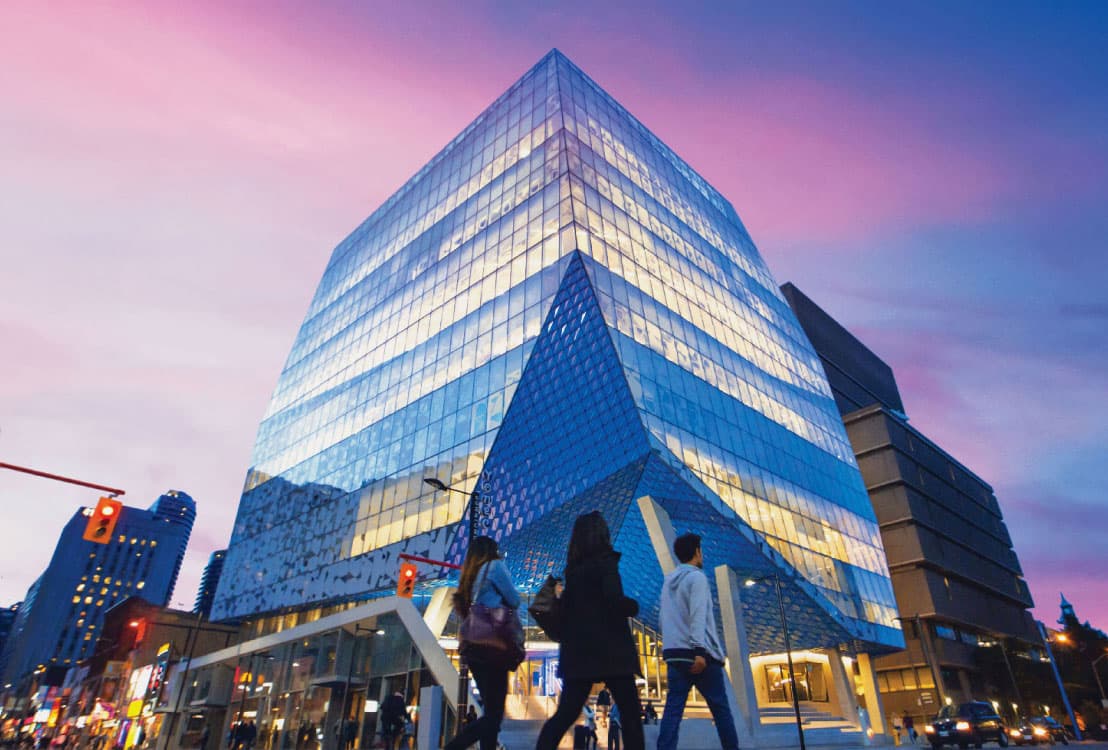

The TTC and Toronto Metropolitan University (TMU) are launching five new research projects to explore concepts that could improve TTC operations, infrastructure, and customer experience. The projects are part of a new phase in the Transit Innovation Yard, a joint initiative with the TTC, TMU and the DMZ that aims to accelerate Canadian transit innovation
Through the Transit Innovation Yard, the TTC is opening its system to select start-ups and academics to trial new technologies and ideas – providing the TTC the opportunity to examine emerging solutions and pursue those with clear potential. The partnership is a part of the TTC’s broader push to build a more innovative, future-ready transit system.
“Toronto is home to world-class universities,” said Mayor Olivia Chow, “Through the Transit Innovation Yard partnership, we’re harnessing the incredible talent in our city to build cutting-edge, made-in-Canada solutions to transit issues here and around the world.”
“I look forward to seeing these projects get underway,” said TTC Chair Jamaal Myers. “We’re always searching for creative new ideas to provide better safety and service for our customers. I’m hopeful that this research will produce valuable, practical insight.”
“TMU is proud to bring solutions-focused, innovative research expertise to the TTC,” said Mohamed Lachemi, President and Vice-Chancellor at Toronto Metropolitan University. “Our entire community will benefit from this collaboration, which will address critical challenges for the transit system that so many at our university and in our city rely on.”
The five selected research projects are:
• An automated rail inspection system – Led by Dr. Farrokh Janabi-Sharifi, this project will demonstrate a compact sensing system installed beneath a TTC rail vehicle to capture high-resolution imagery of rails and nearby track infrastructure during normal movement. The system will analyze the data to identify potential defects such as cracks, missing fasteners, or debris, helping TTC teams better monitor track conditions and plan maintenance.
• A cross-device digital wayfinding solution – Led by Dr. Ali Mazalek, this project will create a proof-of-concept for in-station wayfinding kiosks. Users will be able to connect their phones to the kiosks and access route information – as well as share that information with other contacts.
• A sustainability-focused digital twin of a TTC yard – Led by Dr. Jenn McArthur, this project will develop a digital twin of a TTC yard that visualizes energy use across major systems, such as heating, ventilation, and air conditioning (HVAC). The initial prototype will demonstrate how energy flows through the facility, highlight possible waste and allow TTC teams to test potential energy-reduction opportunities.
• A study of the TTC Underground Sounds Subway Musician Program – Led by Dr. Charlie Wall-Andrews, this project will study how live music influences the customer experience, rider mood, and perceived safety. The project will also look into the feasibility of musicians having an expanded safety function within select TTC stations.
• An AI engine for dynamic route optimization – Led by Dr. Sharareh Taghipour, this project will develop a prototype AI engine that can dynamically optimize routes, factoring traffic conditions, service disruptions and passenger demand, with the aim of improving service reliability and operational efficiency.
Projects are expected to progress over the next 9-15 months, culminating in recommendations and next steps for the TTC’s consideration.
“As we work to modernize and transform our system, partnerships like this are essential,” said TTC CEO Mandeep S. Lali. “By connecting our operations expertise with the research excellence of TMU, we are exploring practical new solutions to real-world challenges – at no cost to the TTC.”

Featured image: (TMU)