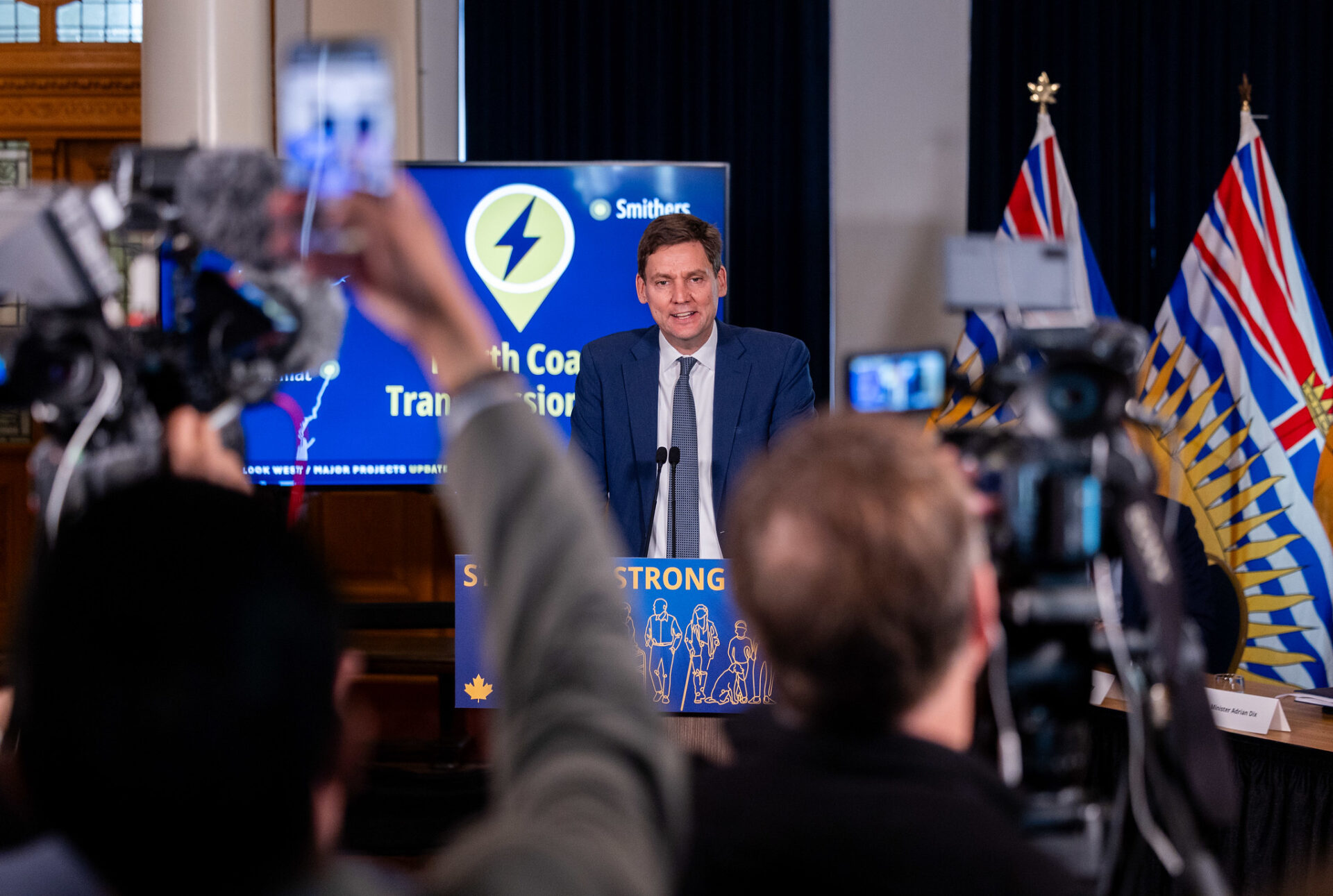

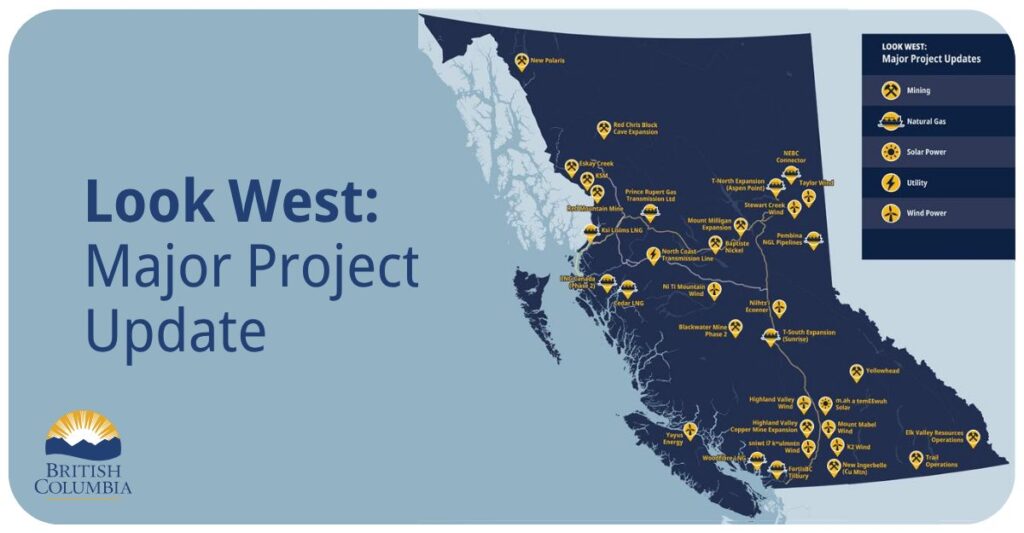
The Government of B.C. announced the addition of 17 new major projects, through its Look West Strategy, to the list of priority projects, nearly double the previous number. The $88-billion worth of proposed project investments will create tens of thousands of jobs, estimates the government.
“At a time when countries around the world are looking for responsibly developed resources and stable trading partners, this is British Columbia’s moment,” said Premier David Eby. “Through our Look West plan, we’re leveraging our strengths here to get major projects built, create good jobs, and invest in skills training so people can step into these opportunities and earn bigger paycheques. This is how we create long-term prosperity to support the public services that make us all better off.”
Look West was launched in November 2025 as a targeted plan designed to deliver major projects, strengthen B.C.’s and Canada’s economic security in the face of economic threats, and create good jobs and opportunities for people to train for careers in the skilled trades.

It includes a goal to secure $200 billion in investment by 2035 for major projects in B.C., and a commitment of $241 million over three years to double trades training funding and permanently strengthen and expand B.C.’s trades training system.
“The global uncertainty from U.S. tariffs and the war in Iran are having real impacts on people and businesses, but we’re not backing down or waiting,” said Ravi Kahlon, Minister of Jobs and Economic Growth. “Forty per cent of the federal government’s priority major projects are right here in B.C., and we believe there should be more. That’s why we’ll be submitting this new list of projects to the Government of Canada, so we can keep working together to grow a strong, national economy that can stand on its own.”
According to the province, by speeding up permitting while also recognizing the importance of Indigenous engagement and strong environmental stewardship, major mines and energy projects are moving faster and will provide new opportunities and good jobs for people, and significant revenue to the Province that will help pay for the schools, hospitals, police and transportation infrastructure that people in B.C. rely on.
This includes the Phase 2 expansion of the Blackwater gold and silver mine, a $1.44-billion investment, which is anticipated to create 1,500 construction jobs and an additional 300 operational jobs, bringing total employment to 1,200 permanent operations positions, and could generate an estimated $2 billion in mineral tax over the multi-decade life of the mine.
This is one of the projects that is now included in the Province’s list of priority major projects to support their progress.
The province also announced it is taking action to boost electricity supply.
The Province has passed regulations to make the BC Energy Regulator the primary regulator for renewable energy projects, including wind and solar power, as well as major transmission infrastructure such as BC Hydro’s North Coast Transmission Line (NCTL). The immediate benefit of this change will be streamlined and expedited permitting for BC Hydro’s 2024 call for power projects. These 10 wind and solar projects represent approximately $6 billion in private-sector investment. Combined, the clean-energy projects are expected to create approximately 2,000 jobs annually during construction and will generate nearly 5,000 GWh per year, boosting B.C.’s electricity supply by 8% – enough energy to power approximately 500,000 homes.
One of these projects is the sniwt iʔ k̓ʷul̓mntn Wind Project, which is majority owned by the Upper Nicola Band and being developed in partnership with Elemental Energy. This 94-megawatt wind farm will be located between Merritt and Kelowna. The project is targeting construction in spring 2027. Once operational, the project will produce enough clean electricity to power approximately 25,000 average homes each year.
In 2025, the Province and BC Hydro launched a second call for power, which is targeting an additional 5,000 GWh annually. Projects resulting from the 2025 call will be announced this spring.
Featured image: (Government of B.C.)