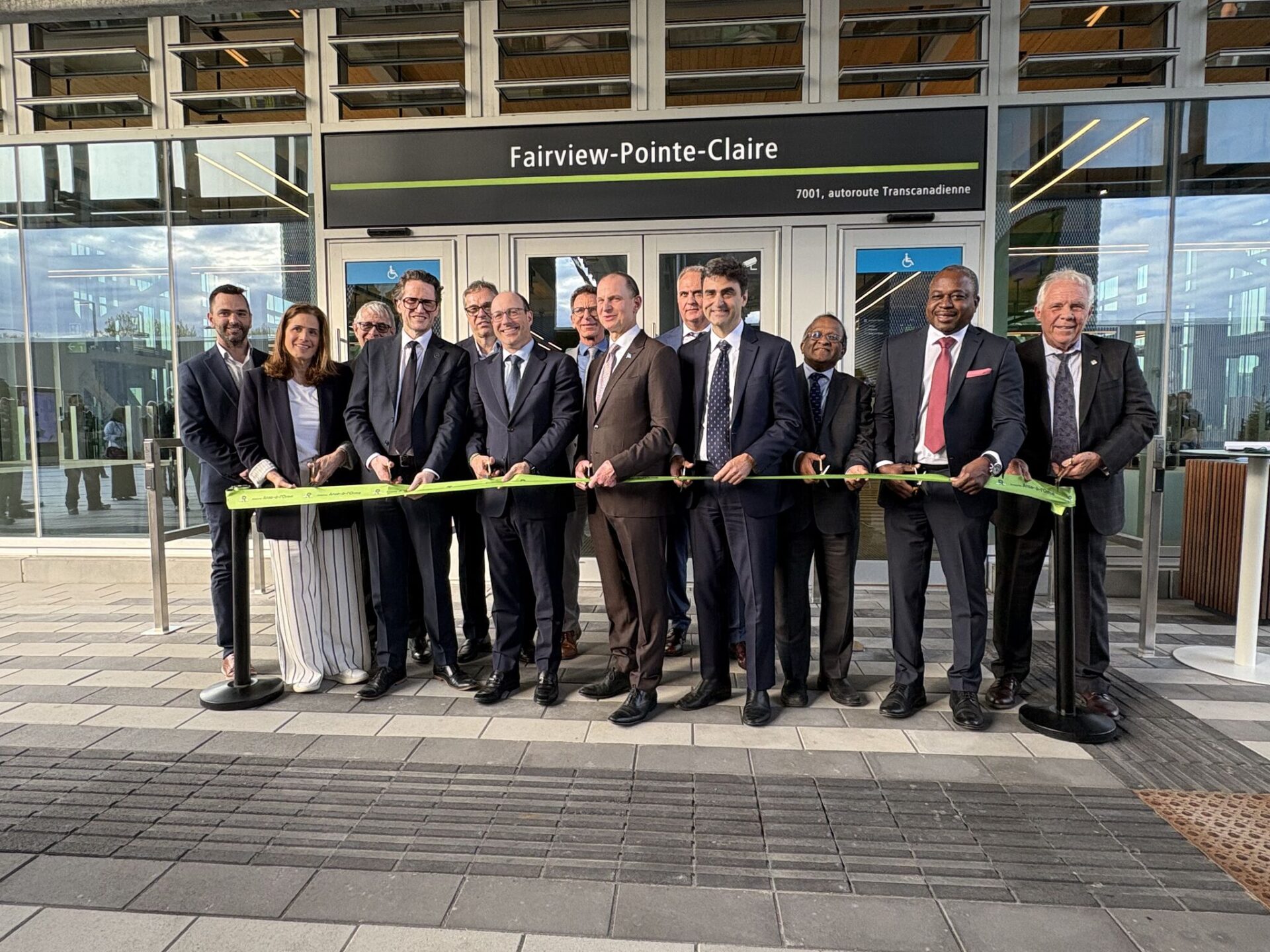

The Réseau express métropolitain (REM) reached another major milestone this Monday, May 18, with the commissioning of the Anse-à-l’Orme branch, marking the arrival of the REM in Montréal’s West Island.
The Anse-à-l’Orme branch, which extends the REM by 14 kilometres and adds four new stations, located in the cities of Pointe-Claire, Kirkland and Sainte-Anne-de-Bellevue, becomes the first high-frequency, high-capacity transit system to serve this part of the island.
“The commissioning of the Anse-à-l’Orme branch marks an important step forward for sustainable mobility in the West Island. By providing frequent, reliable and integrated public transit, the REM meets the real needs of citizens while helping reduce congestion and greenhouse gas emissions from transportation. This is a structuring project that aligns fully with Québec’s vision for sustainable mobility,” said Benoit Charette, Minister of Transport and Sustainable Mobility.

The extension expands REM service to nearly ten additional municipalities and boroughs, in complementarity with STM and exo bus routes, which have been reconfigured to connect to the network, ensuring enhanced intermodality in the West Island. With the addition of the Anse-à-l’Orme branch, the REM stands out for its configuration: a fully automated, light metro system operating at high frequency along a central trunk line and distinct branches.
The REM project is No. 9 on ReNew Canada’s 2025 Top100 Projects report.
“The commissioning of the Anse-à-l’Orme branch represents a major step forward for mobility in the West Island. Seeing the REM extend into this sector is the result of years of hard work carried out in collaboration with many partners. Day after day, the network demonstrates its ability to provide reliable, high-frequency service that meets citizens’ expectations. We will continue working in this direction, toward an even larger and more impactful network,” said Daniel Farina, president and CEO, CDPQ Infra.
Featured image: (REM)