
Canada’s Building Trades Unions (CBTU) pressed the country’s labour ministers to provide the needed political momentum towards the national harmonization of safety standards training in the construction industry.
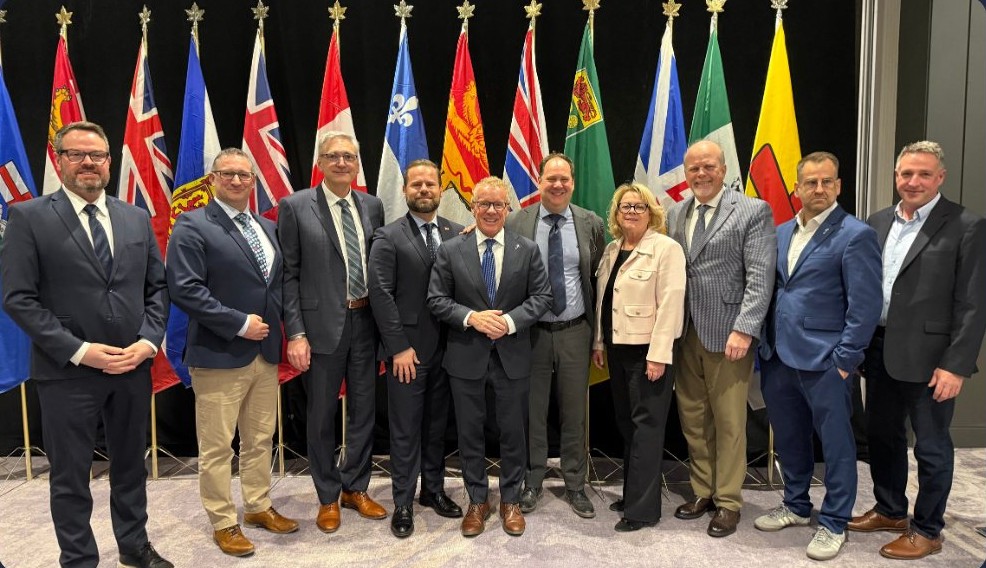
Addressing the Federal-Provincial-Territorial Annual meeting of Ministers responsible for Labour in Quebec City, CBTU’s executive director Sean Strickland explained that the current structure, whereby individual province and territory manages its own distinct safety training regime, creates onerous delays resulting in loss of time and money for workers, employers and the Canadian economy.
“We all know that in the current economic and geopolitical context, Canada needs to build a more diverse, resilient, and efficient economy. Governments, private and public sector organizations, and unions: we all bear part of the responsibility for driving this progress forward,” Strickland remarked.

Strickland reminded the ministers that last January, Canada’s First Ministers agreed to advance labour mobility by “accelerating work to recognize priority health and safety requirements in the construction sector by Fall 2026.”
“This is not an issue for one or two provinces, but a “whole of Canada” issue. (…) Workers are on board. Contractors are on board. First Ministers agree. It’s time to stand up for Canada’s construction tradespeople.”
At the meeting, to make it easier for workers, especially those in construction, to move between jurisdictions without requiring re-training, Ministers endorsed the workplan on harmonizing occupational health and safety training curriculum with accelerated timelines, allowing each jurisdiction to determine how to implement it. Topics include:
- Working at Heights and Mobile Elevating Work Platforms training by January 1, 2027;
- Consulting on training for Hoisting and Rigging and Trenching and Shoring by January 1, 2027; and
- Collaborating on training for Entry-level Construction Worker and Construction Supervisor by May 2027.
Ministers also directed officials to identify tangible steps to advance an interjurisdictional training approach by the fall of 2026. They also agreed to meet more frequently to ensure work continues to eliminate labour mobility barriers. Ministers will meet again in the fall of this year in Nova Scotia and in the spring of 2027 in Saskatchewan to discuss progress made.
“The changing world of work means governments have to work together, within their respective jurisdictions, to support workers and help businesses. By facilitating labour mobility and maintaining high health and safety standards, we are helping build a stronger economy and more modern workplaces,” said Jean Boulet, Québec Minister of Labour, Minister of Economy, Innovation and Energy.
Featured image: (CBTU)