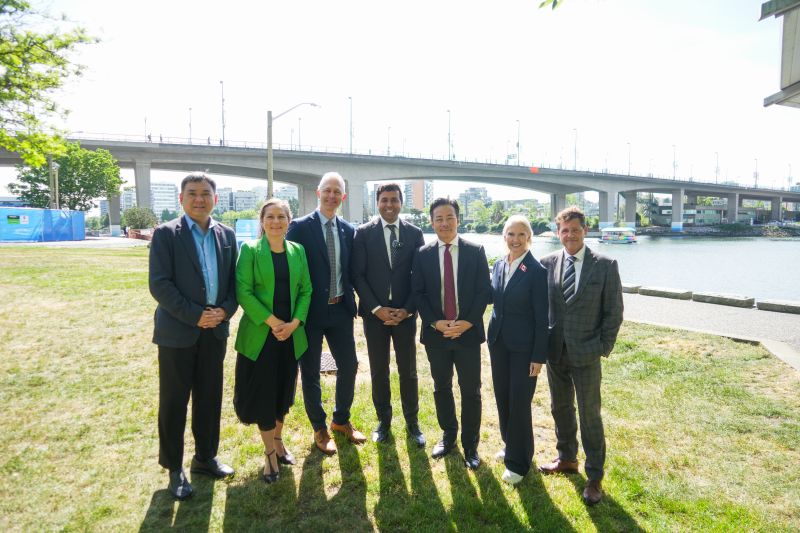
Cambie Street Bridge, one of the Vancouver’s most critical bridges, will be upgraded to meet modern seismic standards following a combined investment of over $200 million from the federal government, the City of Vancouver, and TransLink.
The Cambie Street Bridge, which connects the densely populated downtown peninsula with the rest of Vancouver, is located in an active seismic region. The bridge, which opened in 1985, features five vehicle lanes, a two-way bike path and pedestrian walkways. It serves as a major transit route with over 13 million vehicle crossings annually and is also part of TransLink’s Major Road Network (MRN), which ensures the safe and efficient movement of people and goods across the region.
“The critical upgrades to the Cambie Street Bridge are not just about protecting infrastructure; they are about safeguarding lives, preserving livelihoods, and keeping our community connected and resilient in the event of an earthquake. Today’s announcement reflects our commitment to working closely with local partners to enhance the city’s preparedness. These upgrades will strengthen the bridge’s structural integrity, ensuring it remains reliable during a seismic event and supports the community in the subsequent recovery,” said Taleeb Noormohamed, MP for Vancouver Granville.

This project will enhance the bridge’s seismic resilience through upgrade and rehabilitation work delivered over multiple phases, reducing potential earthquake damage and repair costs. The upgrades will also enhance public safety and help maintain a reliable transportation network by supporting efficient emergency response and emergency vehicle access, protecting communities and critical infrastructure beneath the bridge, and reducing recovery needs following an earthquake. Over the bridge’s lifespan, these upgrades will reduce future rehabilitation needs and deliver longer term reliability.
“Taking proactive steps to future-proof the Cambie Street Bridge is critical to ensuring the long-term safety and resilience of our community and infrastructure. These upgrades will strengthen our ability to respond to natural disasters, keep key transportation routes open when they’re needed most, and improve climate preparedness across our city. We’re grateful to the Government of Canada and TransLink for their partnership and funding support, which make these important improvements possible for everyone who lives in, works in, and visits Vancouver,” said Ken Sim, Mayor of the City of Vancouver.
Planned improvements include the innovative and effective use of seismic isolation bearings at all 65 bridge piers, modifying the existing expansion joints, seismically upgrading supports at each end of the bridge, and installing soil anchors to strengthen foundations. In addition to structural upgrades, the project includes transportation upgrades that support long-term sustainability and connectivity, and shoreline naturalization at the north end of the bridge that will pilot a new type of seawall construction designed to be more resilient to sea level rise and coastal flooding.
The federal government is investing $84.4 million in this project through the Disaster Mitigation and Adaptation Fund (DMAF). TransLink is contributing $37 million, with potential additional future funding, and the City of Vancouver is responsible for the remaining project costs.
“The Cambie Street Bridge is a vital part of our local transportation network, and TransLink is proud to contribute to its longevity. By strengthening this critical piece of infrastructure, we’re supporting both emergency response capabilities and long-term growth in our region. These upgrades will ensure communities can stay connected after a major event — when every second matters,” said Kevin Quinn, Chief Executive Officer, TransLink.
Featured image: (TransLink)