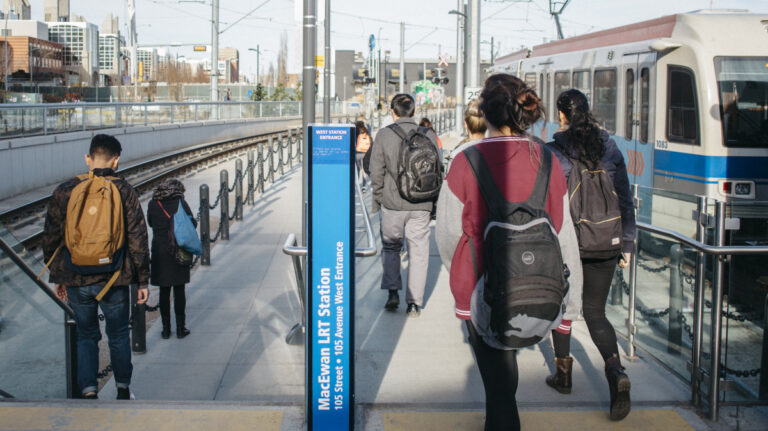

After years of delays and cost overruns, Toronto’s Eglinton Crosstown LRT finally opened to the public. This came on the heels of the opening of the Finch West LRT. With four more major transit projects already underway in the GTA, the issue of the high cost of transit infrastructure has become a hot topic.
ReNew Canada’s recently issued 2026 Top100 Projects report features 25 transit projects with projected costs of $123 billion.
Among the projects are:
GO Expansion–On-Corridor Works — $15.7B
Reseau express metropolitain (REM) — $9.4B
Calgary Green Line LRT — $6.25B
ALTO High-speed Rail Network — $4.3B
Construction on the $13-billion Eglinton LRT (Line 5) began in 2011 and was originally scheduled to open in 2020. Instead, the project was delayed by construction deficiencies, legal disputes between Metrolinx and its private consortium responsible for the design and construction of the line, COVID-19 disruptions, software and signalling problems, and surging costs that pushed the project roughly $1 billion over budget.
The Government of Ontario has been called on to hold a public inquiry into the delays, but Premier Doug Ford says that won’t happen.
“No, we aren’t going to do that,” Ford said when asked about an inquiry at a news conference to unveil a plaque for the Crosstown. “We’re going to move on and continue building the subways. We all know the mistakes and we’ve acknowledged them, and we’ve learned.”
In the midst of this unprecedented rail and transit infrastructure build— the kind of nation-building investment envisioned in the federal government’s mandate to accelerate infrastructure at generational speed—how do we ensure future projects stay on-time and on-budget?
A new report from CSA Group, Making the Grade: Recommendations for Addressing the High Cost of Canada’s Transit Infrastructure, outlines key strategies to reduce, in some cases, exorbitant, Canadian transit construction costs by improving project planning, standardizing designs, and enhancing technical leadership.
“Unfortunately, the cost of infrastructure per kilometre is significantly higher in Canada than in other countries, limiting how much can be built. Despite integrating past learnings, some projects under development in Canada are expected to exceed $1B per kilometre,” says the report’s author Jonathan English,Founding Principal, Infrastory Insights. “This compares starkly with European countries, which are able to build fully underground rapid transit lines for between $200 million and $300 million per kilometre. This is a Canada-wide problem.”
To mitigate against high cost of rail and transit infrastructure projects, the report puts forward the following overarching recommendations:
Get the project right from the outset
Long-term regional network planning, rather than isolated project-by-project thinking, is critical. This includes protecting future corridors early, so that future projects are less disruptive and less costly to deliver. It also means choosing the right technology and scope from the beginning to avoid expensive changes later.
Make decisions intelligently and quickly
Successful delivery depends on empowering the right people—those with the skills, knowledge and experience to guide complex projects—with the authority to coordinate and bind all actors and make timely, informed decisions. Delays and indecision are among the most consistent drivers of increased costs.
Provide political backing for cost-lowering solutions
Governments and political leaders must be willing to support technically sound decisions that may have trade-offs in terms of short-term disruption or visual impact. That includes fully considering and publicly stating the relative costs of different alignments, construction methods and station designs. Governments and political leaders must then firmly stand behind the cost-effective option that delivers the most value.
Standardize and don’t reinvent the wheel
Using proven, off-the-shelf designs, systems, and practices reduces both cost and risk. Modern rapid transit, regional rail, and high-speed rail have all been implemented successfully in jurisdictions around the world. The North American rail and transit market in which Canada has historically been locked by regulation and tradition is tiny and uncompetitive relative to Europe and Asia. Wherever possible, Canada should draw directly from around the world and procure products and services that have been proven in extensive service.
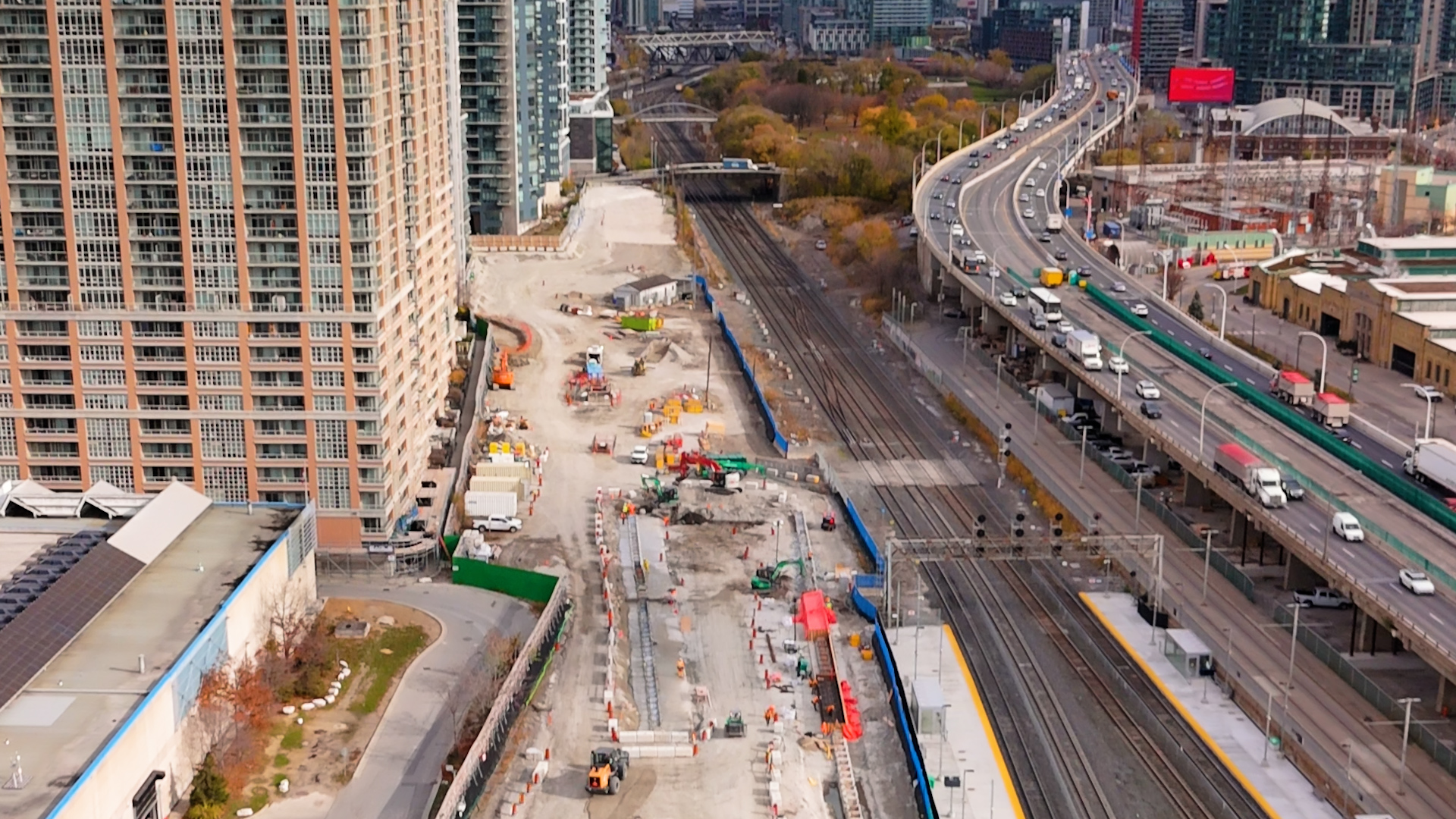
Featured image: Excavation of the tunnel for the Ontario Line at Exhibition Place. (Metrolinx)