
Light House and its Construction Plastics Initiative (CPI), in partnership with Infina Technologies and Plascon Plastics, today demonstrated the first production run of InfinaNet manufactured using plastics recovered from construction sites through the Construction Plastics Initiative (CPI).
Light House launched CPI in 2024, a first-of-its-kind pilot program in North America working with eight construction projects across Metro Vancouver to capture, divert, and repurpose plastic waste generated on construction sites.
While most plastic reduction efforts focus on consumer packaging, plastics generated from construction sites represent a far larger – and largely overlooked – source of waste. Before a building is even completed, construction activities produce significant volumes of plastic including protective films and packaging used to transport and safeguard construction materials.

“Today’s production run shows what circular construction can look like in practice,” said Gil Yaron, Managing Director of Circular Innovation at Light House. “While much of public conversation focuses on consumer plastics, construction activities also generate significant plastic waste. Much of this material still holds value. What this initiative demonstrates is that with the right systems in place, those plastics can be recovered and treated as a resource rather than waste.”
In Canada, the economic value of plastics lost to waste is estimated at $8 billion annually and projected to exceed $11 billion by 2030 if recovery systems are not expanded. Recovering plastics generated during construction projects represents one opportunity to capture more of that value while reducing landfill waste.
CPI was created to help address this challenge, tracking plastics generated on-site while piloting systems to separate, collect, and process these materials for reuse in new products.
Through CPI, plastics arriving on participating construction sites are kept separate from other construction materials and collected before being transported to a processing facility where they are weighed, sorted, and a portion recycled into reusable plastic pellets.
These recycled pellets were used in the production of InfinaNet, an innovative structural system developed by Vancouver-based Infina Technologies, a venture supported through Light House’s Circular Construction Accelerator (CCA). The Government of Canada, through PacifiCan, has invested over $1 million in CCA to accelerate the growth of green building companies in B.C.
“British Columbians are leading the way to a low-carbon future,” said the Honourable Gregor Robertson, Minister of Housing and Infrastructure and Minister responsible for Pacific Economic Development Canada. “Today’s milestone shows how B.C. companies are finding practical ways to reduce plastic waste from construction sites, while lowering emissions and building more efficiently. PacifiCan is investing in homegrown businesses and innovators so they can build the sustainable solutions that build a strong Canadian economy.”
InfinaNet is an voided concrete system designed for floor slabs and wall systems in multi-unit residential buildings. The system uses a lattice of ellipsoid voids to remove non-structural concrete from slabs, reducing material use while maintaining structural performance.
InfinaNet can reduce concrete volume by up to 30 percent, lowering embodied carbon and construction costs while improving installation efficiency and helping accelerate construction timelines.
“InfinaNet replaces non-structural concrete in traditional slabs with a lightweight void system, allowing builders to use less material while maintaining strength,” said Manveer Pattar, President of Infina Technologies. “This demonstration also explores how post-consumer materials like recycled construction plastics could potentially be incorporated into next-generation building systems.”
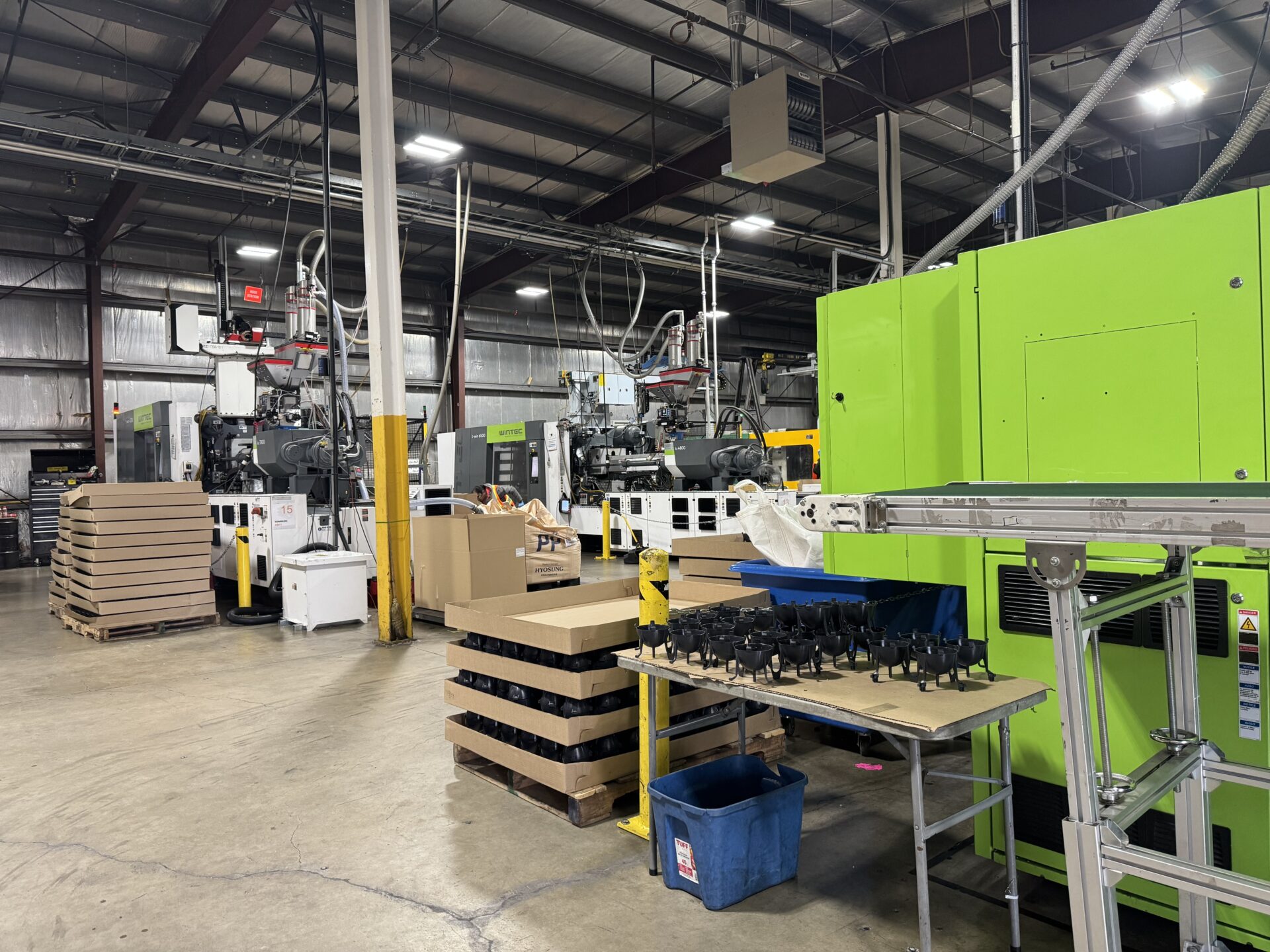
To support the production run, recycled pellets produced through the CPI pilot were supplied to Plascon Plastics, a Delta-based manufacturer specializing in sustainable plastic manufacturing and recycled materials processing.
Working with the CPI team, Plascon manufactured the plastic components used in the InfinaNet system for the production run, helping validate how recovered construction plastics can be incorporated into new building materials.
This project is funded in part by the Government of Canada through Environment and Climate Change Canada and through the CleanBC Plastics Action Fund.
“The CleanBC Plastics Action Fund exists to support this kind of innovation—keeping plastics out of landfills and supporting the circular economy,” said Tamara Davidson, B.C. Minister of Environment and Parks. “It’s great to see the Construction Plastics Initiative coming to life. Projects like this are helping B.C. lead the way in waste reduction, building a cleaner, healthier future for people in this province.”
Featured image: (Light House)