
By Jason Paulos and Hamid Vossoughi
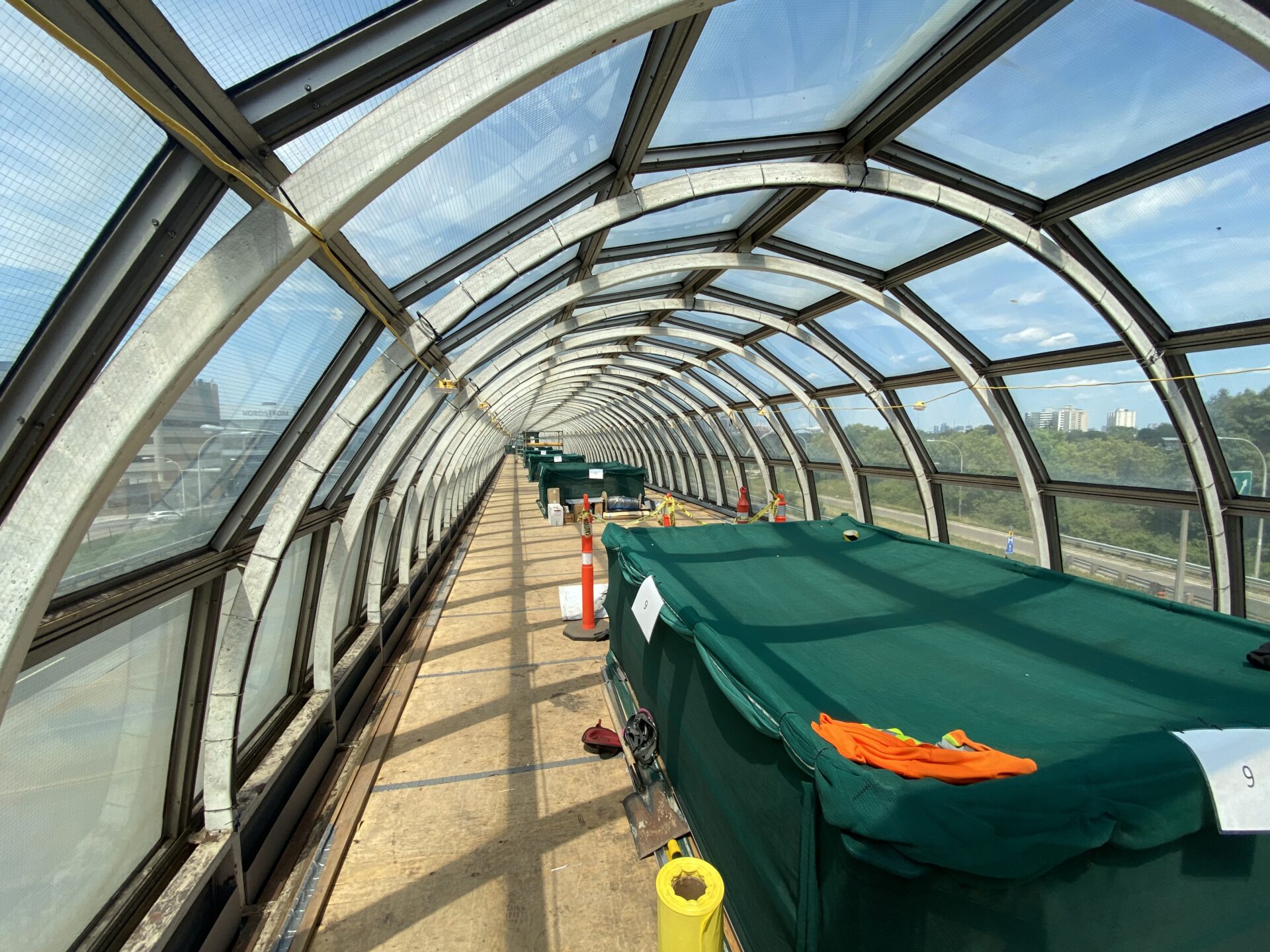
Yorkdale Subway Station in Toronto stands as an architectural icon within the city’s transit network. Originally designed by Arthur Erickson Architects in 1974 and completed in 1978, the station is a multi-leveled concrete and steel structure set in the median of the Allen Road expressway. Its most prominent feature is a 600-foot (183 metre) barrel-vaulted glass skylight that spans nearly the entire length of the central platform. Supported by a curved structural steel framing system, this skylight not only provides essential daylight to the station’s platform but also serves as a visually memorable landmark, connecting transit users to the Yorkdale Shopping Centre.
Over the years, however, the skylight has faced persistent water leakage issues that have created safety hazards, particularly by making the platform slippery during rain events. This leakage has not only posed risks to transit users but has also presented ongoing maintenance challenges. Major restoration work in the mid-1990s was implemented to address these issues by introducing a concealed drainage system into the skylight. However, after 30 years of service, water intrusion has become a concern once again, and water leakage has continued to compromise the station’s operational safety and aesthetic integrity.
Implementing the skylight
The skylight system at Yorkdale Station was originally built as a barrier system in the 1970s, utilizing an aluminum frame with single-pane wired glass panels. During the retrofit in the mid-1990s, the Toronto Transit Commission introduced a concealed drainage system to manage rainwater more effectively. This system included new extrusions and concealed gutters within the expansion joint system. The existing gutters were lined with a membrane to prevent water backflow and ensure that any rainwater that penetrated the joints was properly channeled away from the structure. This updated system incorporated single-pane wired glass that was structurally bonded with silicone to a clear anodized aluminum frame, along with reusing the existing mechanical glass retainers at each corner.
The skylight system includes nine expansion joints that manage thermal expansion and contraction across the length of the system. These joints, along with weather seals and metal flashings, were designed to manage potential water penetration and mitigate damage from Toronto’s variable climate. Louvers are located at the base of the skylight system to provide ventilation to the station and alleviate the impact of the train entry to the station and the imposed piston effect/air pressure on the skylight system.
Additionally, the original design of the skylight featured two access systems for maintenance and repair: an A-frame platform on a guide rail for interior maintenance and a mobile curved ladder on an exterior guide rail. Both systems were designed to allow maintenance workers to perform cleaning and minor repairs as required. However, neither system had been serviced or certified in the recent past, making them unreliable and/or practical to use.
The balance of the station structural shell consists of precast concrete panels positioned in an inverted “V” shape along the platform below the skylight. These panels, positioned at the height of the train cars, are protected by stainless steel cladding to shield them from environmental elements.
Assessing the situation
A 2013 evaluation identified widespread leakage, mainly from degraded seals between the skylight and precast shelter—accounting for nearly 75 per cent of leaks. Expansion joints had visibly degraded, and corrosion was noted on steel support.
The station’s access systems also presented challenges. Both interior and exterior access setups had become difficult to use over time due to limited mobility and outdated designs. Neither system had been maintained or upgraded since their installation, making them ineffective for reaching all parts of the skylight for necessary repairs.
The TTC faced several challenges in executing maintenance on the skylight system due to its age, operational constraints, lack of access for maintenance and or report, and limited budget. Given Yorkdale Station’s status as an active transit hub, it was essential for the station to remain fully operational during the retrofit. This required all work to be conducted during overnight closures, imposing significant constraints on the available work hours each night. Furthermore, the platform’s design as a suspended slab introduced additional complexity, as any interior scaffolding would require shoring underneath, a task complicated by confined spaces.
Another major hurdle was the inaccessibility of certain sections of the skylight. The existing interior and exterior access systems were non-functional. Access to the top of the barrel vault was limited by the position of the precast shelter. In addition, accessing the skylight from above the platform was challenging due to spatial limitations and the safety risks of using exterior scaffolding on an active subway line.
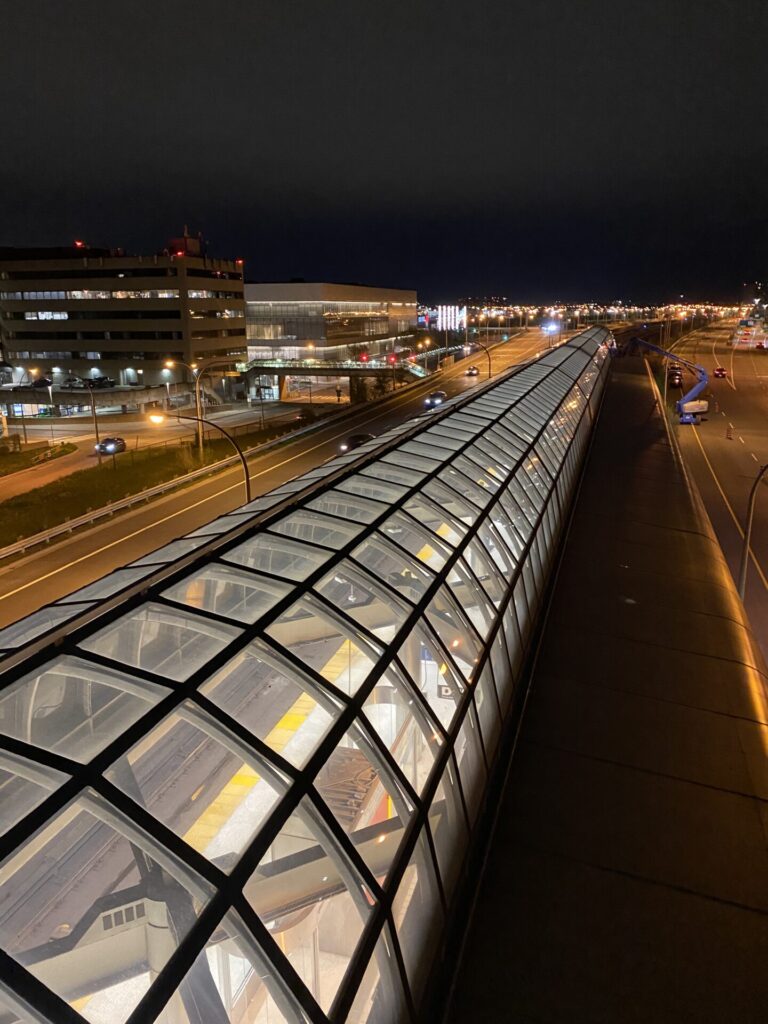
The design approach to prioritize both functionality and aesthetic preservation, focusing on enhancing skylight water management while minimizing disruption to transit operations. (WSP)
Proposed solutions
Given the extent of water infiltration and structural deterioration, the TTC required a remedial solution that would minimize ongoing maintenance demands. Budget constraints limited the TTC’s ability to implement highly invasive repairs or conduct frequent upkeep. Therefore, any solution needed to address immediate safety concerns, protect the structural integrity of the skylight, and extend the service life of the assembly in the most cost-effective way possible, without major intervention similar to the 1990s program.
The ideal solution would provide a durable barrier against water infiltration, slow down the rate of structural deterioration, and address the water leakage, managing the potential public safety hazards caused by slippery conditions on the platform. Additionally, upgrades to the access system, and safe access onto the precast shelter roof, and along the length of skylight, were necessary to ensure that future maintenance could be conducted more safely and efficiently.
The design approach, created by the WSP Canada team, was to prioritize both functionality and aesthetic preservation, focusing on enhancing skylight water management while minimizing disruption to transit operations.
Central to the waterproofing strategy was the installation of continuous silicone strips at the majority of exterior joints. The silicone strips were applied to both the existing expansion joints and other problem areas where water leakage had been most persistent. At expansion joints, the new design kept the existing membranes in place, with backer rods and additional silicone membranes incorporated within the drainage track to create a multi-layered defence system. Stainless steel caps were installed over the membranes to ensure a robust and long-lasting barrier, directing water to the drainage channels at the base of the skylight.
New louvres were installed along the shelter, incorporating a self-adhering membrane to create a continuous barrier against water backflow. The membrane was applied beneath the louvre, terminating on a steel angle upturn, ensuring that any water that passed beneath the louvre would be redirected outside the structure, rather than back into the skylight system. A new sloped metal pan flashing was also installed between the louvre posts to capture water that might bypass the louvres. This flashing extended beneath the louvre, ensuring any water that would have been siphoned into the skylight by the piston effect was directed away from the structure. Additionally, sealant was applied at the base of each louvre to ensure a tight, leak-free seal against the flashing, and drain holes were incorporated into the system to allow for any trapped water to be efficiently expelled. The inner and outer louver head flashings were replaced to ensure a secure and continuous seal around the entire perimeter of the louver assembly.
To support ongoing maintenance efforts, the access systems within Yorkdale Station were modernized with the introduction of four access hatches to the precast shelter, accessible from the interior A-frame platform. Safety features, such as horizontal lifelines, were added to improve the safety and usability of these systems, allowing TTC personnel to access hard-to-reach sections of the skylight for cleaning and minor repairs with greater ease and reliability. In addition, the existing interior moving platform and exterior ladder systems were repaired and recertified.
The construction phase of the project commenced in May 2021 and concluded in August 2024. The work was divided into six distinct phases, each focusing on a specific section of the skylight. These phases allowed the team to work in manageable sections while minimizing disruption to the station’s operations. Construction work was scheduled during overnight hours to maintain uninterrupted service for commuters during the day
A third-party testing firm was brought in to inspect and verify the silicone installation, with five per cent of the strips being tested for performance. Rigorous water testing was also conducted across 100 per cent of the skylight joints, ensuring that the new seals would hold up under real-world conditions. The testing also required careful attention to temperature differentials, as rapid changes in temperature could cause cracking of the glass, especially during colder months.
COVID-19 impacted material delivery and staffing. Supply delays and distancing slowed progress, especially in confined spaces. Work was coordinated with TTC operations to minimize service impact. Scaffolding and boom lifts were used to access hard-to-reach areas
This project illustrates the value of strategic, minimal-intervention solutions in transit infrastructure. Prefabricated silicone strips and new louvres improved waterproofing and extended skylight life within operational and budgetary limits. The Yorkdale Station retrofit shows how innovative materials and logistics can enhance public infrastructure performance and safety.
Jason Paulos is a Façade Project Manager with WSP in Canada.
Hamid Vossoughi is a Senior Façade Engineering Specialist for WSP in Canada.
[This article appeared in the January/February 2026 issue of ReNew Canada.]
Featured image: Yorkdale Subway Station’s most prominent feature is a 600-foot barrel-vaulted glass skylight that spans nearly the entire length of the central platform. (WSP)