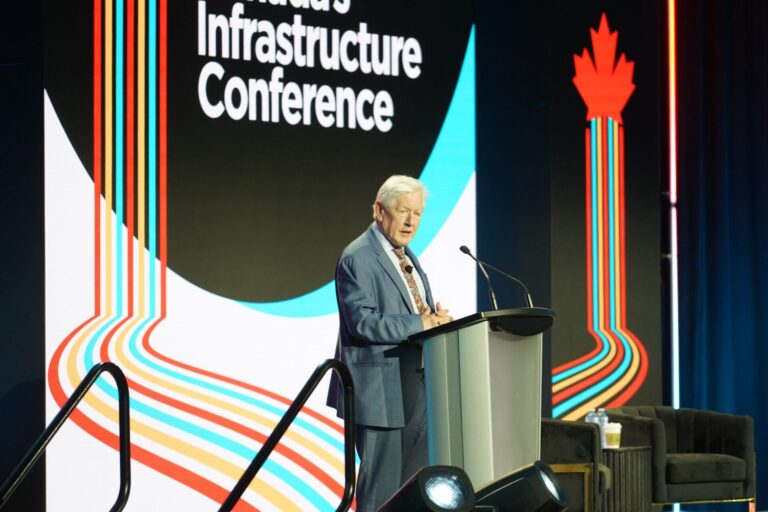

In a keynote address at Canada’s Infrastructure Conference 2026, focused on national defence, economic resilience, and northern development, Northwest Territories Premier R.J. Simpson declared that his territory is standing at a historic turning point. “In the Northwest Territories, we are on the verge of the most significant infrastructure buildout in our history, with implications for Canada’s sovereignty, national security, and for the country’s economy,” Simpson stated.
Addressing the link between physical infrastructure and national sovereignty, Simpson argued that lines on a map mean little without tangible investment on the ground. “You can draw lines on a map, but if you don’t put your money where your mouth is, we’re making it easy for an enterprising state that wants access to the Arctic’s vast resources to question whether Canada’s Arctic really is Canada’s Arctic.” Facing renewed global security threats 80 years after World War II infrastructure efforts, Simpson added: “From day one, Canadians have been clear: subservience is not an option. So we’re taking action and we’re building.”
Despite possessing massive conventional and unconventional petroleum deposits—alongside at least 25 of Canada’s 34 critical minerals, including the world’s largest tungsten deposit, rare earth elements, and lithium—the NWT has lacked the enabling infrastructure to attract sustained private capital. Spread across 1.3 million square kilometres, the territory’s 45,000 residents contend with 27 independent, mostly diesel-powered grids, vulnerable telecommunications, and an 800-kilometre gap between northern and southern highway networks.

“Frankly, it’s an embarrassment of riches that most countries would be happy to have,” Simpson said of the region’s resource endowment. “So, what’s the key to unlocking the NWT’s potential to help make Canada a more secure and prosperous country? Infrastructure in the Northwest Territories.”
Following Prime Minister Mark Carney’s March visit to the territory—which included at least $5 billion in federal defence investments for military installations in Inuvik and Yellowknife—all three of the NWT’s flagship infrastructure priorities were referred to the federal Major Projects Office:
- The Mackenzie Valley Highway: Fully funded in the recent federal budget and targeted for completion by 2032, this two-lane gravel highway will close the 800-kilometre road gap, connecting isolated communities and providing reliable year-round access to Inuvik without requiring drivers to detour through British Columbia and the Yukon. Immediately after its referral, mining giant Rio Tinto began exploring copper deposits along the route.
- The Arctic Economic and Security Corridor: Running north from Yellowknife through mineral-rich terrain to connect with Nunavut’s Grays Bay Port and Road project, this corridor is now led by Indigenous nations—including the Tłı̨chǫ Nation—to balance mineral access with the protection of sensitive caribou habitat.
- The Taltson Hydro Expansion and Grid Connection Project: This initiative will triple generating capacity at the 1960s-era Taltson facility and link it to the North Slave grid, replacing diesel generators, lowering residential power costs, and powering future mining operations.
Underpinning every initiative is co-development with Indigenous governments across a territory where half the population is Indigenous and land claims cover the entire region. “What I’ve learned, and what I increasingly hear from industry, is that early engagement at the very beginning of a project, partnership, equity, and respect are the keys to moving projects forward,” Simpson concluded. “We’re working with the Indigenous nations. There’s no reason why these projects should not move forward.”
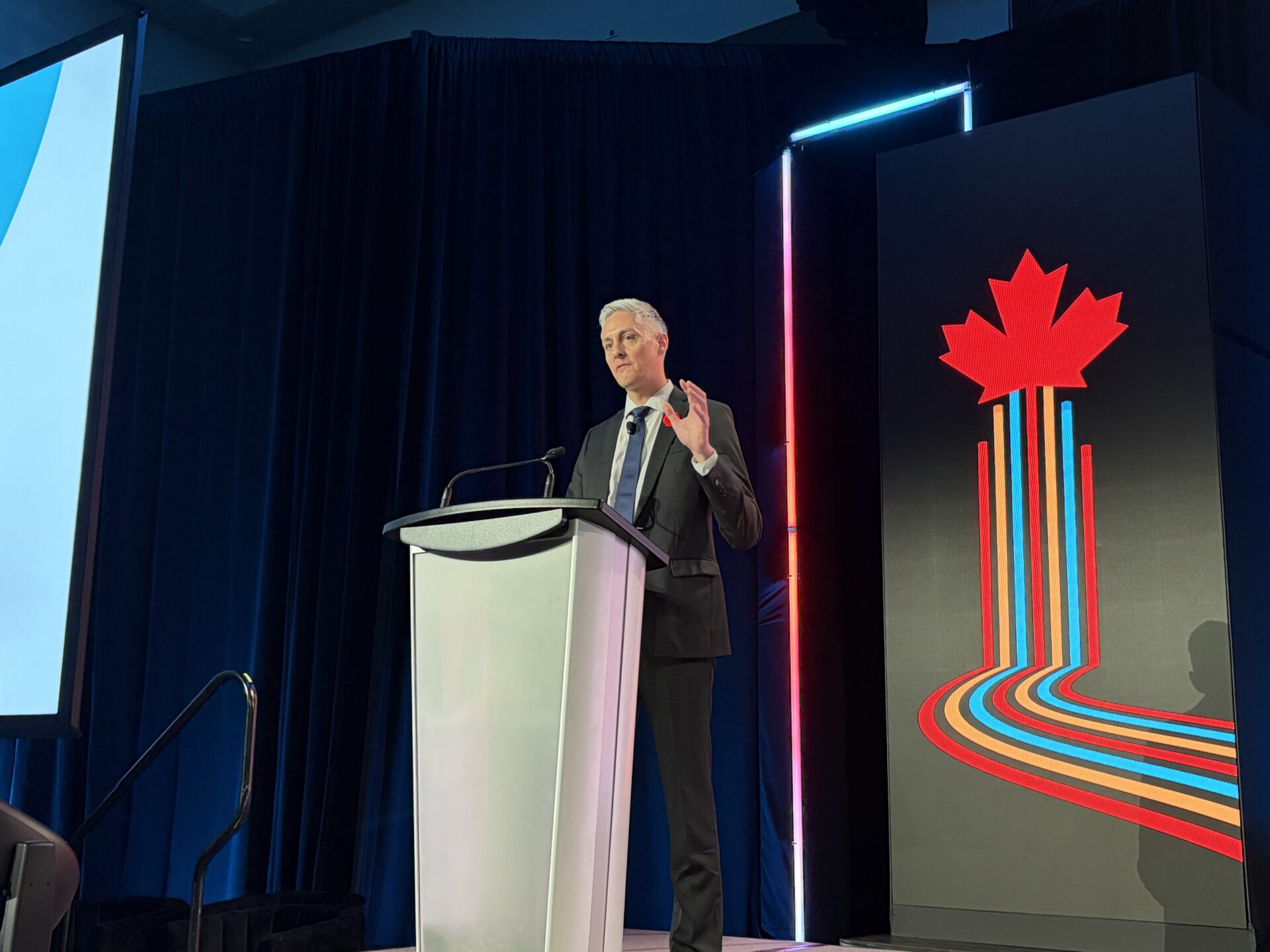
Featured image: Northwest Territories Premier R.J. Simpson speaking at the Canadian Council for Public-Private Partnerships’ annual conference in Toronto. (ReNew Canada)