
By Seema Lal and Gurjot Sunner
Disruptions from global events such as trade wars can lead to significant economic uncertainty. The rapidly evolving situation surrounding the imposition of U.S. tariffs on Canadian goods and the reciprocal tariffs placed by Canada on U.S. imports have resulted in supply chain disruptions that have led to dire consequences for many industries, including the construction industry. The imposition of these tariffs has only exacerbated the supply chain disruptions and labour shortages that the industry was already dealing with as a result of the COVID-19 pandemic. Admist this tense trade and supply-chain situation, it is imperative to consider risk management strategies to address the ongoing uncertainties surrounding these issues.
In this article we will assess strategies for managing economic and other legal risks stemming from tariffs, changes in law and supply chain disruptions from a legal perspective, including how contracts can be set up to mitigate risks resulting from changing market conditions and changes in law.

Current lay of the land and the impact on supply chains
The U.S.-Canada tariff situation remains fluid, with ongoing changes reflecting shifting economic priorities. As it stands, we have seen impacts on construction projects such as increased material costs, increased disputes, project delays, and supply chain disruptions. In some cases, these factors have resulted in projects being cancelled or abandoned and a rise in insolvencies, particularly in the residential sector (which is facing additional risks related to the softening real estate market).
Effective June 4, 2025, the U.S. proclamation Adjusting Imports of Aluminum and Steel into the United States, increased U.S. tariffs on steel, aluminum, and their derivatives from 25 per cent to 50 per cent. Further, effective August 1, 2025, the U.S. imposed a 50 per cent tariff on copper imports pursuant to U.S. proclamation Adjusting Imports of Copper Into the United States. Tariffs on Canadian goods were also increased from 25 per cent to 35 per cent pursuant to U.S. executive order Amendment to Duties to Address the Flow of Illicit Drugs Across our Northern Border.
Effective March 13, 2025, Canada imposed 25 per cent retaliatory tariffs on a list of products including $12.6 billion in steel products, and $3 billion in aluminum products. Effective September 1, 2025, the tariffs on certain goods imported to Canada were removed pursuant to order-in-council Order Amending and Repealing Certain Orders Made Under the Customs Tariff (United States Surtax), however, the tariffs on imports of steel, aluminum, and automobiles remain in place as of the date of this article.
Risk management from a legal perspective
Contracts may be structured to incorporate specific provisions that allocate and manage risk effectively to provide clarity, predictability, and security for parties to a contract. The following are a few examples of contract provisions that parties can consider incorporating in order to provide protection against the risks arising from economic uncertainty.
Price Escalation Clauses: A price escalation clause can allow for the adjustment of a contract price if there has been an increase in the cost of materials. This clause can enable the contractor to be compensated for any increases in cost that were not anticipated at the time the contract was entered into. In order to ensure that there is balance in the risk allocation, the project owner can require the contractor to provide specific information/documents to support the request for payment for additional costs and to demonstrate that the increase was due to unforeseeable events (i.e. one which the contractor could not have reasonably anticipated) and may consider including a reference to a particular pricing index to determine whether there has actually been an increase in the costs of the specified materials. Incorporating minimum and maximum thresholds for the right to an adjustment of the costs and specifying specific materials that the provision will apply to will also assist the owner in managing their exposure in relation to the risk of these increased costs. The benefit of such a clause for owners would be to avoid a contractor adding a significant contingency to their pricing to account for risks of cost escalations.
Force Majeure Clauses: A force majeure provision (which is one that frees one or both parties from liability or obligation when extraordinary events occur that are beyond their control such as natural disasters, war, pandemics) can be incorporated into a contract to provide relief for a party’s non-performance if certain prescribed events have occurred and have resulted in one of the parties being unable to perform their obligations. It is important to remember that the right to be excused from performance on the basis of an extraordinary/unforeseeable event does not exist at common law and in the absence of an express force majeure clause in a contract, a party may have no legal excuse not to perform under the contract, even in the case of an unforeseen event outside of the control of the parties. The only exception would be if the event renders the contract impossible to perform, in which case, the party can seek a declaration that the contract has been legally frustrated (which is a very high bar). Generally speaking, force majeure clauses will not provide relief to the project owner in relation to payment obligations under the contract but they may provide additional time to the contractor to complete the work, if one of the events specified in the force majeure clause results in a delay to the schedule. Such clauses were used by contractors during the pandemic to seek schedule extensions. The clauses usually only entitle contractors to additional time to perform the work but do not usually provide contractors with the right to compensation for such schedule extensions.
Change in Law Clauses: A change in law clause allows for an adjustment in the contract price and/or the schedule when a change in any applicable laws occurs after a specified date, generally the date the parties enter into the contract. Change in law clauses are typically applicable in very specific circumstances and generally require the contractor to connect the change in law with a direct additional cost of performing the work. Additionally, such clauses usually put the risk of change in laws on the project owner, which is the case with the CCDC suite of standard construction contract documents. This would include changes in law that introduce new or increased taxes, duties or tariffs as well as changes in other areas that result in increased costs to the contractor. These provisions were commonly used by contractors during the pandemic to seek recovery of additional costs from project owners due to increased/heightened health and safety regulations, which included the requirement for social distancing and increased sanitary requirements. These provisions are now being used to seek recovery of additional costs incurred by contractors due to the introduction or increase of tariffs on materials (on the basis that such tariffs were not in place when the contract was entered into by the parties). These clauses can be drafted to require timely notice of a contractor’s intention to advance a claim for additional costs based on a change in law and to specify restrictions on the costs the contractor may be entitled to recover (e.g. limiting entitlement to provable direct additional costs only and excluding recovery of overhead and profit on these additional amounts) in order to mitigate the owner’s exposure in relation to additional costs.
In today’s volatile trade and supply chain climate, the construction industry must proactively manage risk. Contract tools such as price escalation, force majeure, and change in law clauses provide clarity, allocate risk fairly, and help projects withstand shifting market conditions. By anticipating disruptions and building flexibility into agreements, parties can better safeguard projects and maintain stability amid ongoing uncertainty.
Seema Lal is a Partner and Co-Chair of the Construction and Infrastructure Practice Group at Singleton Urquhart Reynolds Vogel LLP.
Gurjot Sunner is Articled Student at Singleton Urquhart Reynolds Vogel LLP.
[This article appeared in the November/December 2025 issue of ReNew Canada.]
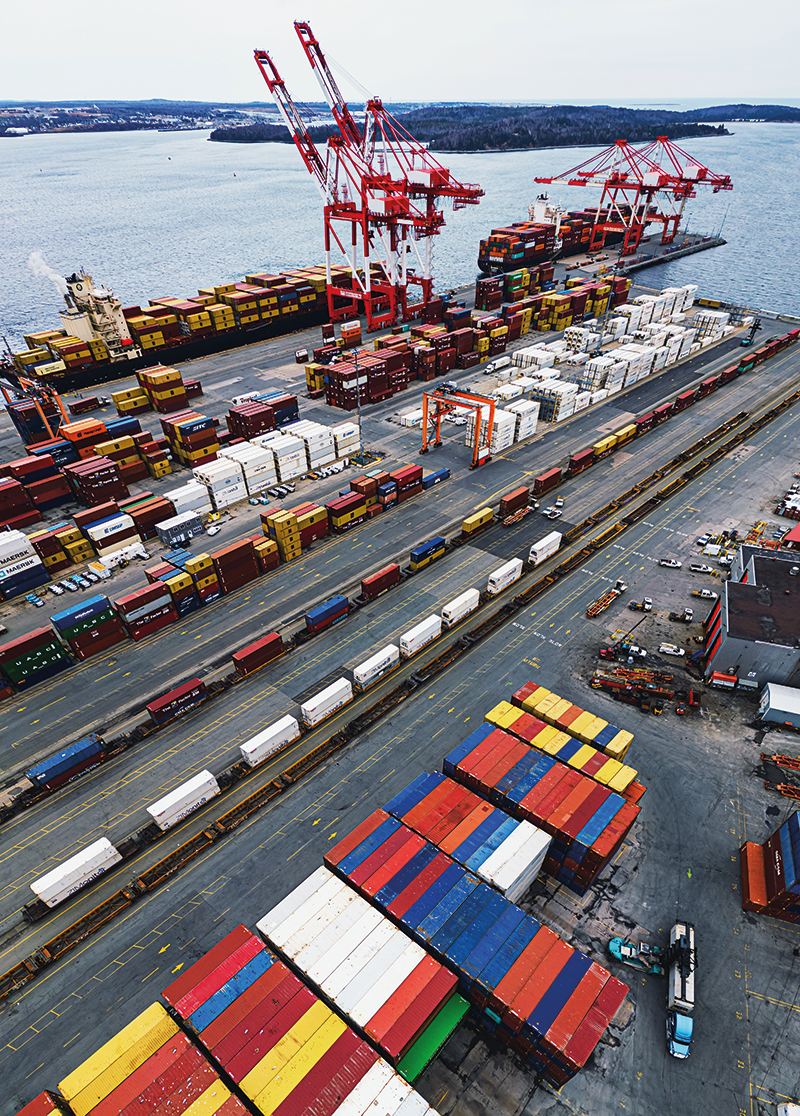
Featured image: The rapidly evolving situation surrounding the imposition of U.S. tariffs on Canadian goods has resulted in supply chain disruptions that have led to dire consequences for many industries, including the construction industry. (Getty Images)