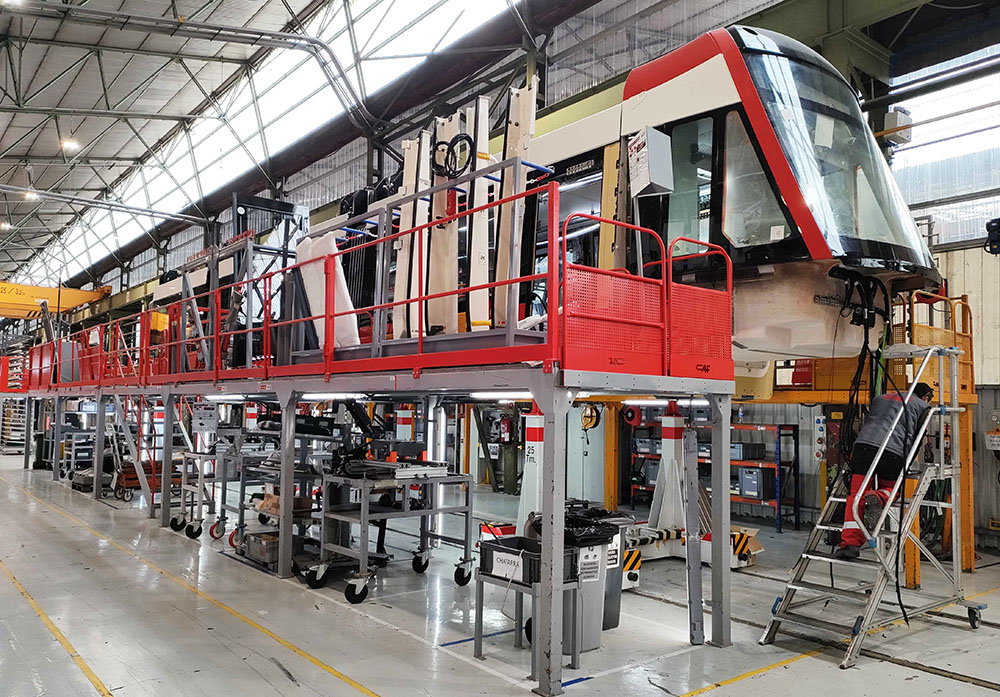

Manufacturing of the Green Line’s light rail vehicles (LRVs) is officially underway. The first two trains are now being built.
According to the City of Calgary, the first vehicle is about 40 per cent complete and is expected to be finished in Q3 2026. A second vehicle is in the early stage of manufacturing. These first two trains are the prototype vehicles used to test and fine‑tune every system before the remaining 26 trains are built.
Once the first vehicle is complete, it will go through months of rigorous testing. Every button is pressed and each function is checked to make sure everything works exactly as it should. Testing starts with static tests (while the train is stationary), followed by dynamic testing on a test track — things like braking, acceleration, and door operation.
When the second vehicle is ready, the two trains will be connected and tested together. Since Green Line will operate two‑car trains, this phase ensures the vehicles work seamlessly as one unit. Systems like braking, propulsion, communications, and doors must all perform perfectly when the trains are linked.
Each vehicle has a driver’s cab at both ends, which means the two trains can be connected in four different configurations. All are tested to ensure safe and reliable operation in every possible setup.
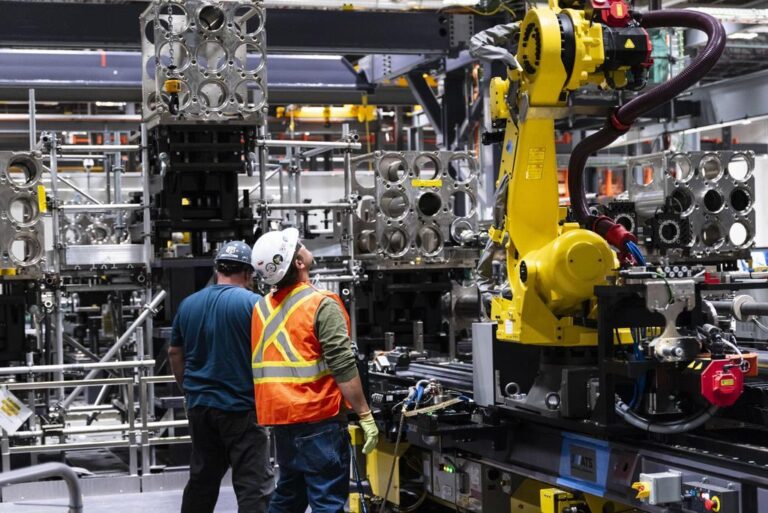
Manufacturing began in 2025 with the aluminum car bodies, or “shells.” From there, the exterior is painted and the vehicles move along the assembly line, where windows, flooring, and seating are installed. The final stage includes adding electrical systems like power converters, communications equipment, and lighting.
The Green Line LRVs are being built by Construcciones y Auxiliar de Ferrocarriles (CAF) at their production facility in Zaragoza, Spain. CAF was awarded the contract in 2021 to supply 28 LRVs for the Green Line.
These trains mark two major firsts for Calgary: they will be the city’s first low‑floor LRVs, and the first time CAF’s Urbos 100 model is used in Canada. Low‑floor trains were chosen for the Green Line because they improve accessibility, enhance safety, and better integrate with surrounding communities.
More testing will take place once the trains arrive in Calgary, including checks for acceleration, braking, tunnel clearance, and alignment with station platforms. Cold‑weather testing will also help ensure the trains perform reliably in snow and ice.
In 2025, AtkinsRéalis was announced as the Delivery Partner for the Calgary Green Line LRT, providing technical and project management expertise including engineering and design, procurement support, construction management, and commercial services to support the delivery of Phase 1 of the LRT line.


Featured image: The first Green Line train on the assembly line. (Green Line LRT)