
As infrastructure investment accelerates across Canada, owners are managing portfolios that range from dense urban transit systems to large-scale highways, climate resilience infrastructure, and remote builds, each with a unique set of constraints, stakeholders, and risks.
In these environments, complexity is no longer the differentiator. The ability to deliver reliably across them is.
That shift is redefining what public sector owners seek in a civil partner: not just experience on the largest and most complex projects in the country, but the ability to maintain the same standard of delivery across project types, geographies, and conditions.

Companies like EllisDon are operating at that scale, applying a consistent approach regardless of project scale or geography. At the core of that capability is a simple principle: while every project is different, the standard of delivery holds.
Consistency Across Complexity
EllisDon’s civil portfolio spans project types that, on the surface, appear fundamentally different, from transit and highways to flood protection and major government infrastructure.
“These major infrastructure projects have different technical requirements, delivery models, stakeholders, risks, and execution challenges,” said Max Mantha, President of Construction at EllisDon. “While no single project playbook applies everywhere, we can identify the unique aspects of the work and then leverage the many experiences and lessons learned of our teams across the business to bring speed and consistency.”
Instead, EllisDon approaches this diversity through a foundation of shared systems and governance that connect initiatives from coast to coast, allowing teams to apply lessons learned — and maintain alignment — regardless of project type or location.
“The project type may change, but the expectations around planning, risk management, constructability, safety, commercial discipline, and execution quality should not. We are very deliberate about transferring knowledge between projects and regions. Lessons from a transit project may not relate directly into a flood protection job, but the thinking around stakeholder management, staging, design coordination, utilities, procurement, and risk often does translate,” Mantha said. “The value lies in knowing what to adapt, not just what to repeat.”
Project teams, he adds, need the freedom to respond to local conditions while staying connected to the experience and tools of the broader organization.
Underpinning everything else is relationships — with clients, local communities, Indigenous partners, municipalities, and regulators. These relationships aren’t peripheral to delivery, Mantha explains; they’re what makes complex delivery possible. And they’re integral to the balance between local execution and national consistency.
A Track Record Across Canada’s Most Complex Projects
This approach is reflected in a portfolio spanning across Canada.
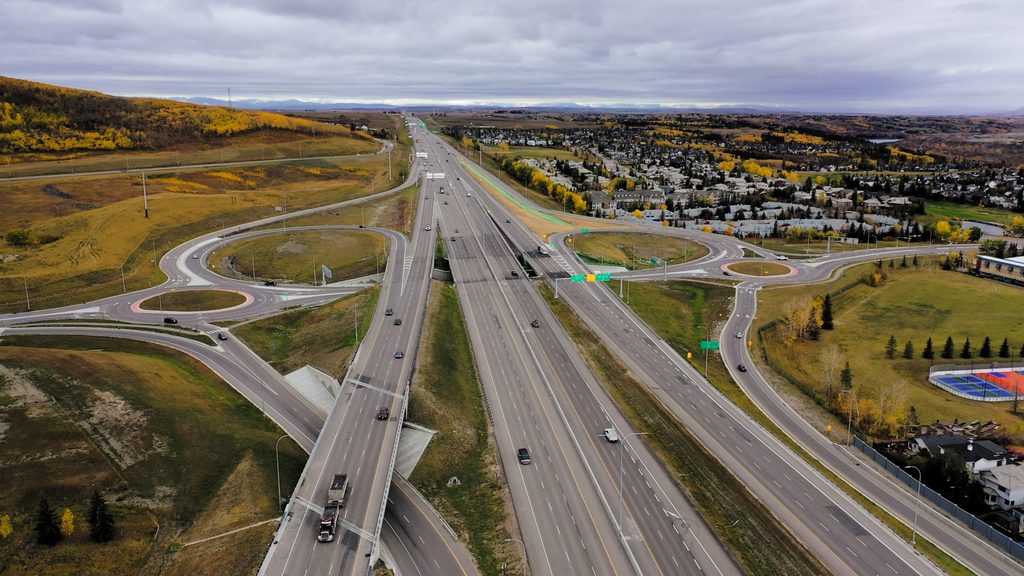
In the GTA, the QEW/Credit River Improvement project widened and improved a critical 2.6-kilometer stretch of highway, constructed a new twin bridge over the Credit River, and added active transportation crossings for the City of Mississauga. In Alberta, projects such as the West Calgary Ring Road and the 4th Avenue Flyover are addressing critical transportation needs, improving connectivity and supporting long-term regional growth.
Meanwhile, projects like Toronto’s Port Lands Flood Protection initiative are redefining the city’s waterfront while strengthening resilience against future flooding.
Each project presents a different set of problems to be solved, but are anchored by the ability to plan, coordinate, and deliver at scale. And this consistency translates to even the most challenging environments.

Delivering Anywhere
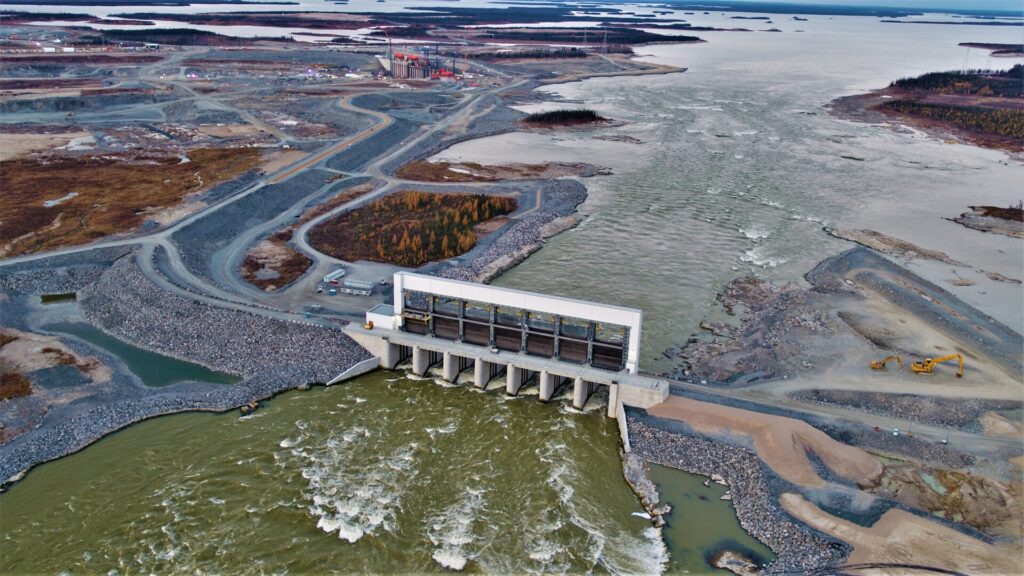
EllisDon’s work on projects like the Canadian High Arctic Research Station (CHARS) in Cambridge Bay, Nunavut, and the Keeyask Hydroelectric Generating Station in northern Manitoba demonstrates the level of planning, logistics, and adaptability required to deliver in the country’s most remote regions.
CHARS — a world-class, year-round hub for technology and environmental science completed in 2017 — was shaped by the realities of Arctic construction. Fabricated steel and key materials had to be delivered during a narrow annual window when ice conditions allowed for shipping, leaving little margin for error and requiring precise advanced coordination.
Keeyask, located on the lower Nelson River in northern Manitoba, presented a different kind of challenge. The project involved the development of a 695-megawatt hydroelectric generating station, Manitoba’s largest-ever capital project, alongside the construction of a remote camp to support a workforce of approximately 2,000, all amid extreme temperatures and wind chill.
“Building and sustaining a high-performing team in remote environments like CHARS and Keeyask requires a deliberate approach to both people and planning,” said Josh Manning, Senior Vice President & Area Manager, Civil at EllisDon. “These projects present unique challenges, from complex logistics with limited access to extreme weather conditions, and the need to work closely within local communities.”
Manning explains that success in these complex circumstances depends on more than capability — adaptability is also key, alongside a preparedness to operate effectively within unique circumstances for sustained periods of time. While experience still holds great value, individual strengths and local talent (who bring local perspectives) are also integral.
“Ultimately, high performance in these environments comes from building teams that are technically strong, locally informed, and able to adapt to changing conditions,” Manning said.
While these environments are distinct, the capabilities required to deliver across them are found throughout all of EllisDon’s large-scale civil projects.
Same Standards, Higher Stakes
EllisDon’s civil expertise is also being applied to infrastructure with significant defence components — projects that demand a high degree of coordination, governance, and discretion, alongside the same complex regulatory and stakeholder requirements found across broader infrastructure delivery.
“Our teams understand not just what is required, but how to deliver against those expectations with reliability, precision, and confidence,” said Mantha.
Through longstanding defence-related work experience, the company has developed internal systems and processes that support delivery in highly controlled environments.
The Repeatability Factor
A portfolio like EllisDon’s runs on more than technical capability — it runs on people who take a long-term view of what the work actually means. EllisDon has been 100% employee-owned since 2020.
“Specifically with infrastructure projects, it’s all about perspective and understanding the impact that work has on multiple communities and the economy as a whole,” says Manning. “While there is a distinct level of sacrifice you make as an individual, working in these environments reinforces the importance of taking a long-term view.”
This perspective shifts how Manning and his team think about the work itself. “These projects are not just about delivery; they are about creating infrastructure that connects communities, supports economic growth, and provides lasting value well beyond the construction phase.”
When the people delivering Canada’s infrastructure have a genuine stake in the company doing it, “ownership” shifts from concept to core value.
A Partner for Canada’s Infrastructure Future
In a market defined by increasingly complex infrastructure demands, the ability to deliver consistently is what ultimately sets leading civil builders apart, ensuring success is not defined by a single project or environment, but by the ability to deliver wherever it matters.
As infrastructure investment continues to grow across Canada, owners and partners are seeking builders who can deliver — consistently and reliably — across project types, regions, and levels of complexity. EllisDon does.
_________________________________________________________________________________________________________
This article was produced in partnership with SiteMedia Content Studio.