
As the Greater Toronto Area (GTA) undergoes a historical infrastructure expansion, regional transit leaders are shifting focus from construction price tags to long-term operational success.
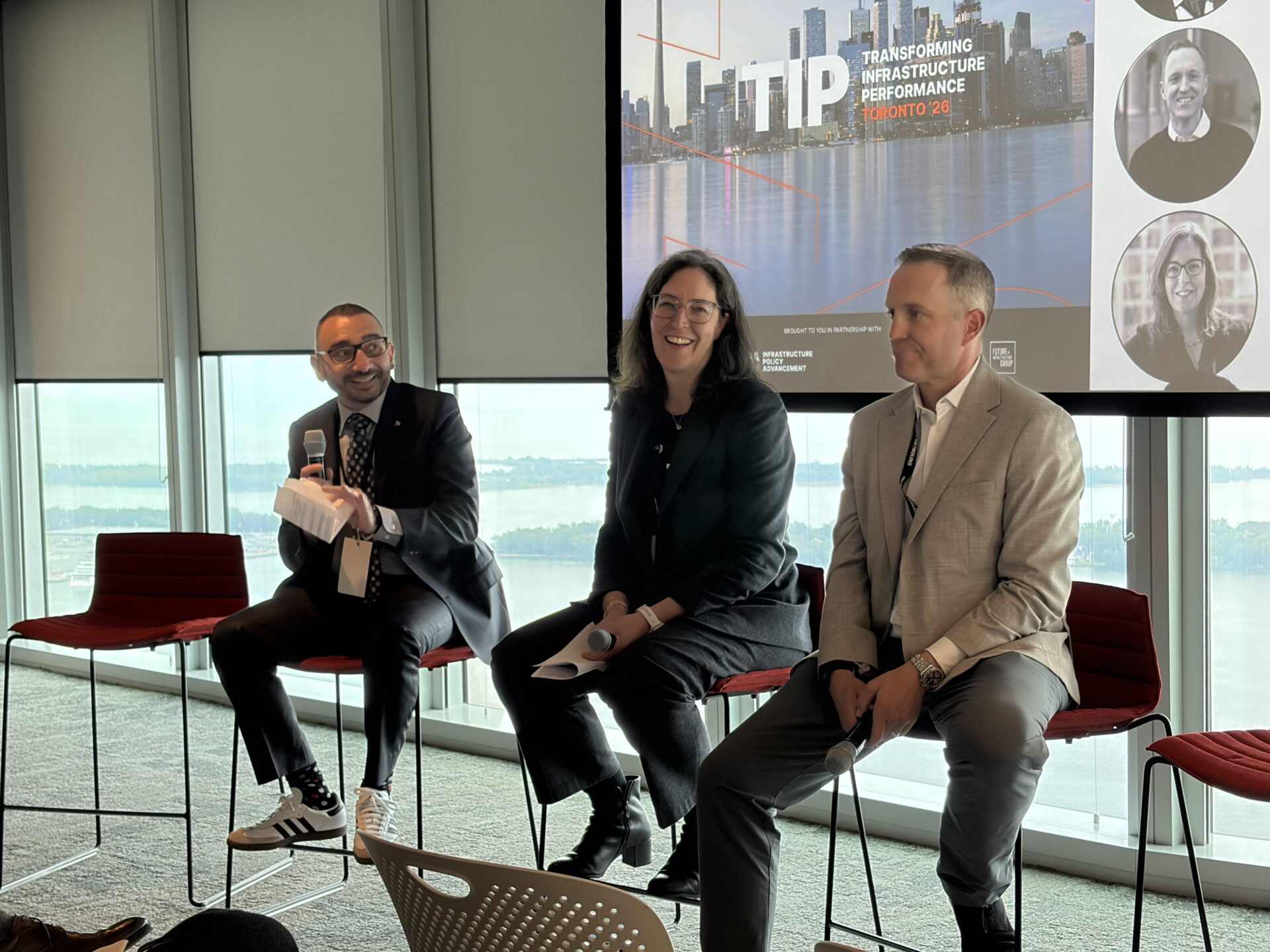
During a panel discussion on the future of GTA mobility, at the Transforming Infrastructure Performance Summit in Toronto, Metrolinx president and CEO Michael Lindsay and Stephanie Davies, chief captial officer at the TTC shared insights into how performance metrics, technological innovation, and disruption management will define the next decade of transit.
Hosted by Bentley Systems’ Infrastructure Policy Advancement initiative, in partnership with The Future of Infrastructure Group, the Institution of Civil Engineers, and Microsoft, the summit brought together leaders, policymakers, and innovators to address Canada’s most critical infrastructure challenges.

Redefining Long-Term Success
Transit investments across the region have surpassed $100 billion, but both panelists emphasized that financial expenditure is not a measure of success. Instead, success will be judged by the tangible, daily benefits delivered to commuters.
Lindsay highlighted intermodal connectivity as the primary benchmark. Modern transit must move people seamlessly between distinct districts through key integration hubs like East Harbour, Whitby, Mount Dennis, and the Ontario Line. He pointed to the Eglinton Crosstown LRT as an example of this network approach in action, facilitating transfers between GO Transit and the TTC to move upwards of 75,000 riders daily.
“[It has a] huge amount of promise for intentionally moving people from district to district across the network, and when it does so effectively, I think that’s how we’ll be judged 10 years from now,” said Lindsay.
Davies reinforced that true success occurs when transit becomes the reliable, expected norm for a expanding region. To achieve this, transit authorities must integrate massive expansion projects with consistent “state of good repair” programs to guarantee long-term network resilience. Modern performance standards also require listening directly to passengers; during recent FIFA events, targeted transit priority measures and clear communication tools—like e-paper displays at streetcar stops—helped the TTC achieve a 92 per cent customer satisfaction rating.
“I think it’s really re-evaluating how people want to access our system and our network, and making sure that we bring innovative solutions to do that,” said Davies.
Harnessing Technology for Safety and Efficiency
Integrating data and new technology is critical to optimizing existing assets while expanding the footprint. Davies noted that agencies are deploying drones for structural condition assessments, utilizing software like Maximo for asset management, and exploring “digital twins” to simulate service disruptions before they occur in real time.
Addressing core infrastructure needs remains equally vital. Lindsay underscored the urgency of foundational safety upgrades, such as positive train control, across a network that serves 340,000 daily passengers. He also highlighted the potential of targeted AI, citing a CCTV algorithm deployed at Exhibition Station during major events to streamline Presto card tap-offs and manage crowd flow.
Additionally, network electrification remains a top priority to boost train acceleration, shorten journey times, and reduce long-term operational costs. However, Lindsay cautioned against over-engineering rolling stock, warning against a local “F-35 reality” of redesigning electric multiple units (EMUs) from international manufacturers that already hold global safety certifications.
Navigating Disruption Through Transparency
Building a modern transit system requires performing what Lindsay described as “open heart surgery” on a living city. With GO Transit managing 72 major track closures this year alone—a 70% increase year-over-year—customer satisfaction inevitably faces pressure.
Both Davies and Lindsay agreed that public trust can only be preserved through absolute authenticity. Agencies must clearly communicate the necessity of short-term disruptions, supply chain volatility, and trade-offs to riders, stakeholders, and elected officials alike. By fostering transparency and deep collaboration between partners like Metrolinx and the TTC, the region can navigate this intense period of construction and build a truly integrated transit network for the future.
Featrued image: (L to R) Omar Alghabra, vice president, Public Infrastructure Canada, Bechtel (Former Minister of Transport, Canada); Michael Lindsay, president and CEO, Metrolinx; and Stephanie Davies, chief capital officer, TTC. (ReNew Canada)