
Governments across Canada have made infrastructure central to their economic and trade ambitions. The challenge is no longer whether to build, but whether projects can be delivered at the pace and scale required in an increasingly complex and unpredictable risk environment. Nearly two years out from the federal government’s embrace of the ‘Build Agenda,’ we have seen announcements of new programs, agencies, delivery bodies and financing tools designed to advance infrastructure priorities in this new environment: yet some obstacles remain part of the picture.
Approvals, procurement complexity, labour shortages and rising costs are colliding with geopolitics, growing fiscal pressures and affordability concerns. Now, governments must deliver with private partners in uncharted waters. What is working at this stage? Where can governments make progress to maximize industry investment? And what policy or regulatory changes could have the greatest impact on accelerating delivery, improving outcomes and addressing risk?
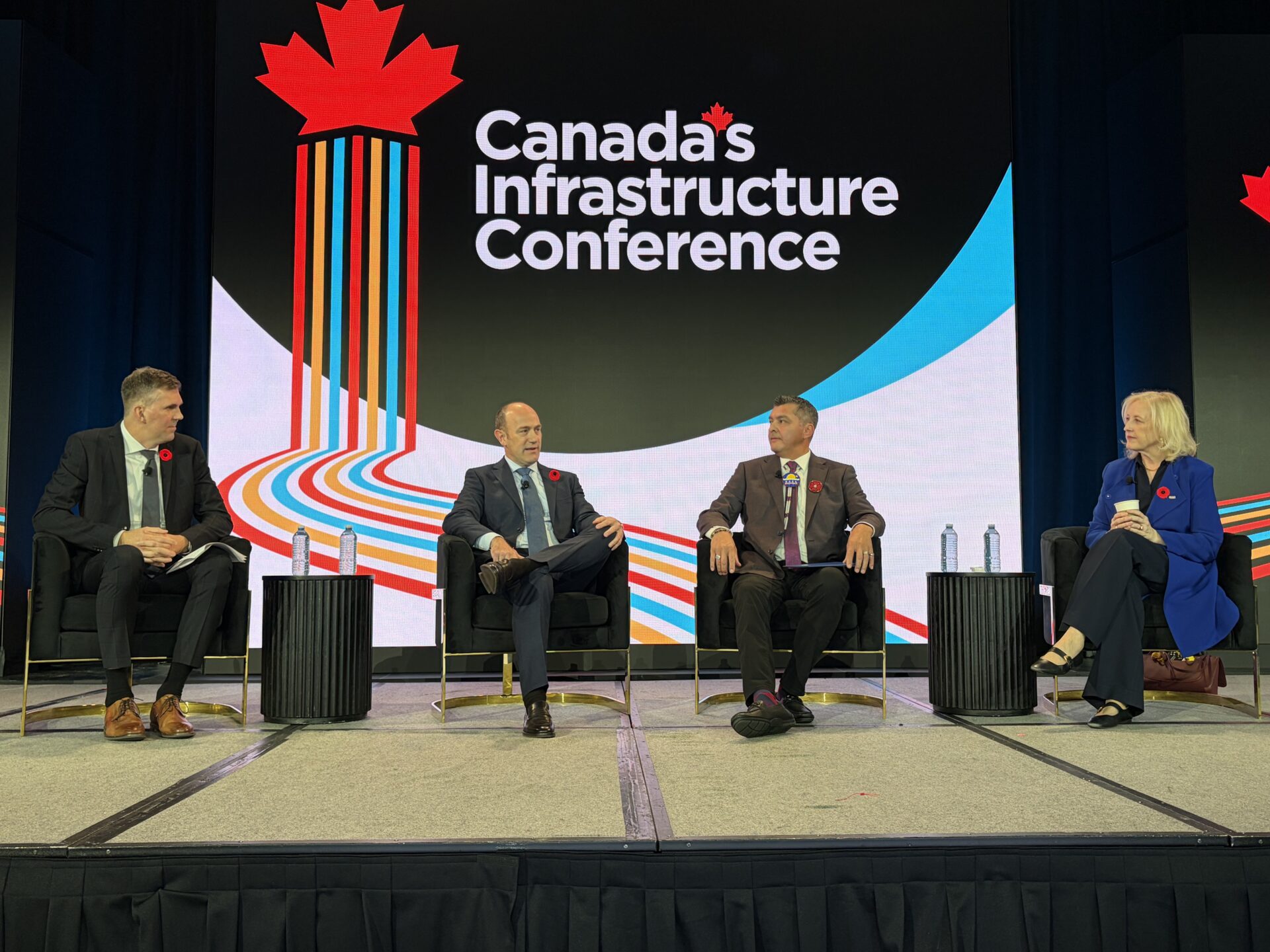
At a panel discussion at Canada’s Infrastructure Conference 2026, industry leaders acknowledged that while Canada’s capital intentions are unprecedented, the real test lies in delivery mechanics. As contractor Ricardo emphasized, the sector is not suffering from a shortage of intent.

“I don’t think there’s a problem with ambition in delivering infrastructure projects in Canada. We probably may have an execution gap,” observed Ricardo Ferreras, COO, Amico. “Success will come from planning properly the projects, allocating the risks to the right partner and having a predictable pipeline that everyone, all stakeholders, can adhere to.”
Turning federal announcements into physical worksites requires certainty long before shovels touch soil. Ricardo noted that projects must demonstrate “a clear project definition,” committed funds, and mature environmental and Indigenous processes. Moreover, sustaining this unprecedented volume demands urgent action on skilled trades, apprenticeships, and immigration: “We don’t want to be here in 10 years’ time and say, ‘Yeah, we deliver infrastructure projects, fantastic.’ So, what came along with that? … What is the legacy that we leave in the local communities and in the Canadian industry?”
In Northern Canada, overcoming delivery bottlenecks hinges on genuine equity and early involvement. Reflecting on lessons from decades of diamond mining, Indigenous leaders underscored that consultation cannot be an afterthought if governments hope to accelerate major corridors like the Arctic Economic Security Corridor or the Mackenzie Valley Road.
“Get us engaged, get us involved at the early stages, and it will be smoother transition along that permitting process and so forth,” stressed Grand Chief Jackson Lafferty, Tłı̨chǫ Government. “As opposed to, you know, you get to the project and finally you open the door for us, but it’s kind of too late. We need to be engaged at the front end of any discussion of projects.”
Today, modern treaty holders are advancing projects on their own terms, pairing federal loan guarantees with local workforce training and 25-year maintenance concessions to ensure long-term regional capacity.
From a financing perspective, Lisa Raitt, P.C, Vice Chair, Office of the CEO, CIBC, warned that execution will stall unless public and private sectors align on risk appetite. While federal budgets have encouraged public entities to take bolder stances, private lenders face rigid internal governance.
“To me, that is the gap. It’s understanding the risk, I guess, not the risk assessment, but the allocation, the risk allocation in a project,” noted Raitt, adding that commercial bank risk committees remain inherently risk-averse.
Bridging Canada’s execution gap will ultimately depend on matching political ambition with upfront Indigenous co-development, predictable procurement schedules, and realistic commercial risk sharing.
Featured image: (L to R) Mark Platteel, Gowling WLG (moderator); Ricardo Ferreras, Amico; Grand Chief Jackson Lafferty, Tłı̨chǫ Government; and Lisa Raitt, CIBC. (ReNew Canada)