
Delivering large-scale infrastructure in the heart of a major metropolitan area is often described as performing open-heart surgery on a living, breathing city. At Canada’s busiest transit hub, the Union Station Enhancement Project (USEP) serves as a case study in overcoming the complexity of urban infrastructure.
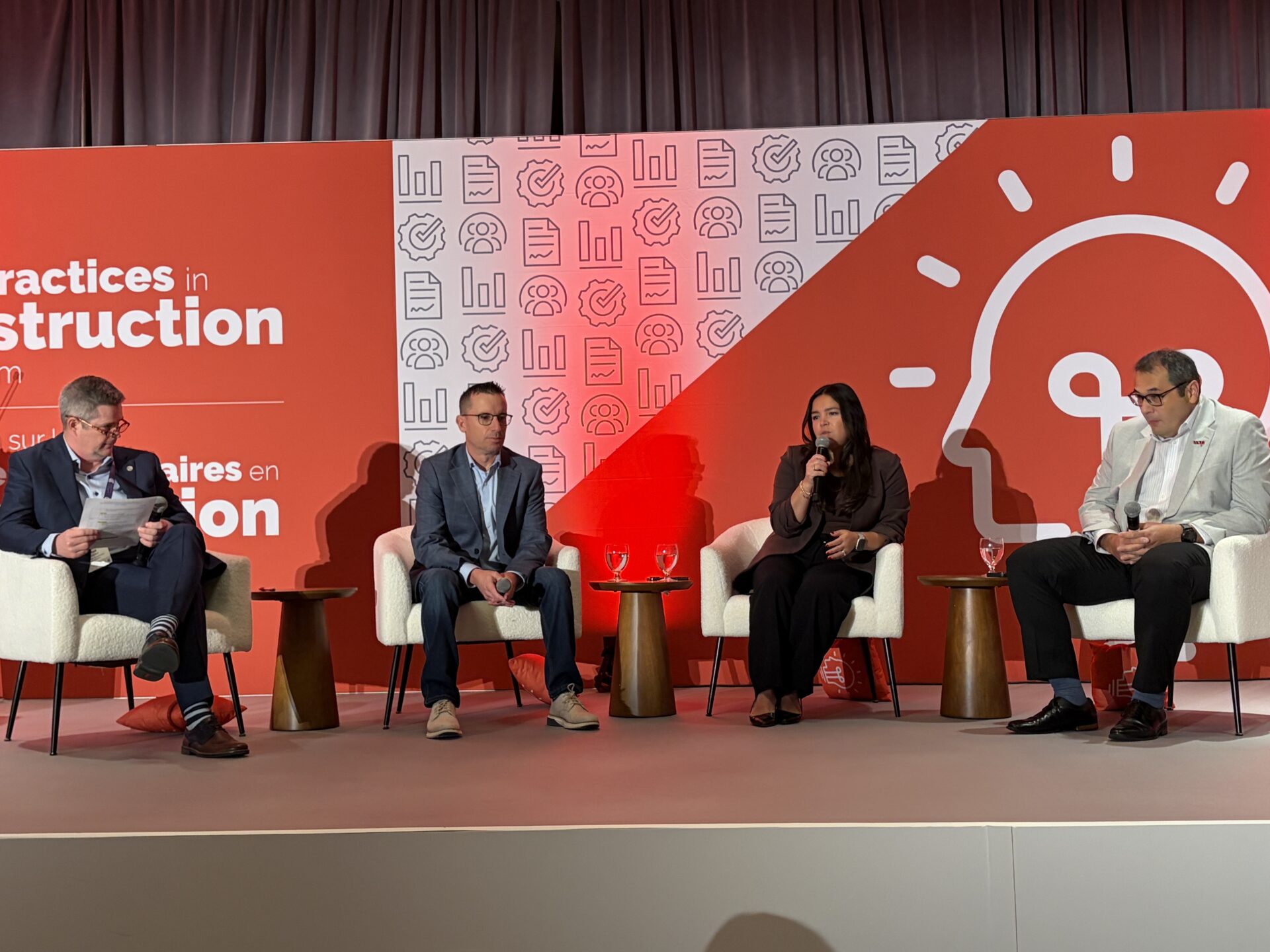
Bringing together key project leaders and experts, a panel discussion at the Canadian Construction Association’s Best Practices in Construction Symposium in Toronto, highlighted how the project redefined governance, risk management, and execution through the use of an Alliance contracting model.
For years, major public transit initiatives relied heavily on traditional, fixed-price Public-Private Partnership (P3) models. However, as infrastructure projects grew increasingly complex, market conditions shifted dramatically.

Marcia Medrano, Executive Vice President, GO Expansion, Union+ at Metrolinx explained that the agency moved away from traditional fixed-price P3 contracts primarily because the market had simply lost appetite for them.
“The market was telling us loud and clear they weren’t interested in getting fixed price jobs anymore, and then from an owner perspective, looking at how we managed risk, the biggest reason why our procurements were failing was because we didn’’ understand the level of risk that we were trying to transfer over to the market,” she said.
According to Tim Shepherd, Vice President and Area Manager, Kiewit, the Alliance structure differs sharply from other progressive delivery formats. While many progressive models foster collaboration only during the initial development phase, the Alliance model mandates continuous, execution-phase collaboration anchored by unanimous decision-making.
All participants pull from the same “bucket” of risk, said Shepherd. If the project runs over budget, every partner feels the pain; if it succeeds, everyone shares in the gain. This financial alignment makes every party equally invested in design accuracy, cost discipline, and constructability.
To maintain this high level of alignment, the project implemented several culture-first strategies, including behavioural coachingto align diverse corporate mindsets, brought in by WSP Canada from the U.K., who spending hundreds of hours training the teams to build a unified, trust-based culture.
It’s easy to say, ‘Hey, let’s work together. It’s okay. We’ll make it work. ‘We really had to change fundamentally the way people foresee the problem, the way people behave,” said Eric Flaubert, Senior Vice President, Major Projects, WSP Canada.
“The key for us was the active participation of trying to change the way we deliver as a group, not simply as an individual, but trying to bond this team together as in ‘Hey, you are part of a new team that’s going to work together and share the problem and show we how bring everybody inside the circle to be able to collaborate actively,’ because that’s important, isn’t it?”
Shepherd said the team conducts bi-annual surveys to evaluate organizational integration, checking whether partners are listening to one another or if cultural friction is surfacing.
Executing major civil works beneath active rail corridors requires extreme adaptability. Medrano said that during the development of USEP, the team faced persistent ambiguity in project requirements. While core structural scope—such as new tracks and wider platforms—remained stable, interconnections to the broader regional transit program continually evolved.
The Alliance framework provided the flexibility needed to navigate these moving targets:
- Design-to-Build Integration: Daily, direct collaboration between designers and contractors allowed site constraints to be identified and resolved long before drawings hit the field.
- Strategic Schedule Management: Rather than advancing designs sequentially for their own sake, the team prioritized design packages strictly based on their direct impact on the project’s critical path.
- Trust and Autonomy in Action: Maintaining progress required a high degree of executive trust. At times, the Alliance team chose to report on new, uncontracted critical scopes rather than adhering rigidly to out-of-date contractual schedules, prioritizing real-world project momentum over administrative formality.
Delivering high-profile infrastructure in the public eye demands schedule discipline, financial transparency, and genuine public trust. Yet, the USEP panel raised a pivotal question that continues to challenge the broader infrastructure sector: How can public owners maintain enough autonomy within their governance structures to allow an Alliance Leadership Team (ALT) to make these necessary, rapid decisions?
“There’s a level of confidence back in our business that the alliance leadership team is making best for project decisions and is has the autonomy to be able to do that,” said Medrano.
Featured image: (L to R) Rod Gilbert, President, CCA; Tim Shepherd, Vice President and Area Manager, Kiewit; Marcia Medrano, Executive Vice President, GO Expansion, Union+ at Metrolinx; and Eric Flaubert, Senior Vice President, Major Projects, WSP Canada. (ReNew Canada)