
By Jerry W. Dobrovolny
Metro Vancouver, the regional district, has long delivered on some of the largest infrastructure projects in British Columbia—some you’ll know by name, while others are delivered soundly with no fanfare.
Today, we have over 300 construction projects underway ranging from routine maintenance to non-market rental housing to major infrastructure replacements. Of those, 10 projects rank in Renew Canada’s Top100 Projects report. But the reality is, most people won’t hear about most of the other projects.
Even as the North Shore Wastewater Treatment Plant has captured media attention, dozens of infrastructure initiatives have progressed or been completed quietly on time and within budget. These projects keep essential services running, generate jobs, attract investment, and improve the quality of life for current and future generations.
Every day, more than three million residents (over half of B.C.’s population) rely on our services, receiving some of the best drinking water in the world, and trusting that the waste in their toilets and bins is properly taken care of. Public infrastructure underlies livability and economic prosperity, and it is the foundation upon which businesses thrive and families flourish.
But the challenges facing infrastructure delivery are increasing—our region’s population is expected to reach four million by 2050, climate threats and natural disasters are looming, our existing infrastructure is aging, and costs have escalated. We must also comply with stricter federal regulations for wastewater treatment to protect the marine environment and public health.
Over the next decade, Metro Vancouver expects it will need to invest over $25 billion into infrastructure to meet these demands. To effectively manage this enormous portfolio we’ve taken steps to continuously improve the way we deliver our biggest and most complex projects.
Metro Vancouver residents deserve to know their tax dollars are working as hard as they are. True value in public infrastructure means building the right projects, at the right time, with the right specifications, so that they’ll serve communities for generations.
Since 2020, Metro Vancouver has made fundamental improvements to how we manage and deliver our highest-consequence projects to maximize this true value. We’ve created a Project Delivery Department, with a centralized Project Management Office, as an in-house centre of project delivery expertise. This wasn’t just an organizational restructure; it was a strategic investment in professional know-how that’s paying dividends on every infrastructure project.
The Project Delivery Department has introduced new processes, such as the Construction Impact Mitigation Framework, which standardizes how Metro Vancouver collaborates with its 23 member jurisdictions (municipalities, treaty First Nations, and rural areas) on infrastructure projects. This has turned what was once a series of ad-hoc negotiations between local governments into a structured, efficient process, resulting in fewer surprises, improved cost certainty, and reliable project schedules.
Another change was the strengthening of the stage gate process all the way up to the Board level. This requires major projects to pass through formal go/no-go checkpoints where independent expert advisory panels, member jurisdiction senior staff, and elected officials ask tough questions, like, “is the engineering sound?” “are these costs realistic?” and “do we have the right team?” This allows us to deliver complex projects with confidence, preventing small issues from becoming expensive problems down the road.
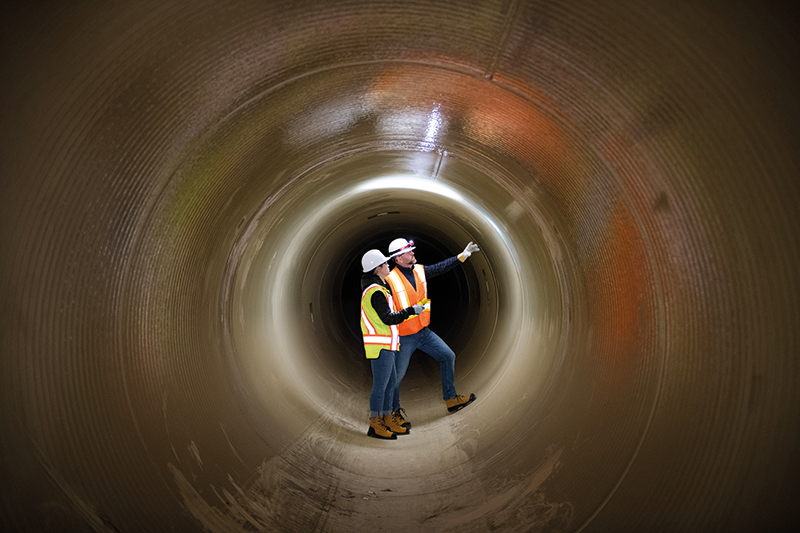
The award-winning Second Narrows Water Supply Tunnel (pictured) shows how this centralized approach works. The 1.1-kilometre, 6.5-metre-diameter tunnel is a remarkable engineering feat: this tunnel under Burrard Inlet is one of the highest pressure soft-ground tunnels ever built in Canada and is designed to withstand a one-in-10,000-year earthquake. The project succeeded not just because of advanced tunnel boring technology, but because of the rigorous planning and delivery processes that ensured every detail was scrutinized at each step along the way.
The next decade is going to be one of big challenges and big projects. Our long-range capital plan calls for upgrades at four of our wastewater treatment plants and a major expansion at the Coquitlam reservoir to secure a reliable water supply for the next 50 years. Climate change is forcing us to build more resilient infrastructure; responding to population growth means increasing system capacity without disrupting existing services; aging assets need to be replaced on time, and stricter environmental regulations are driving continued investment. All of this means we need to be structured and methodical in our approach.
Metro Vancouver’s Project Management Office has enabled continuous improvement where each completed project provides information that makes the next project better.
In an era when every dollar counts, Metro Vancouver is investing tax dollars wisely into infrastructure that delivers exceptional long-term value, stability, and reliability. We’ve created a playbook for how public sector organizations can operate at a large scale and deliver true value: combine technical innovation with process excellence, invest in professional capabilities, and never stop improving.
Jerry W. Dobrovolny is the Commissioner and CAO of the Metro Vancouver Regional District.
[This article appeared in the November/December 2025 issue of ReNew Canada.]
Featured image: (Metro Vancouver)