
By RJ Steenstra
I come from a Dutch family and ancestry, and perhaps that explains why the water has always felt familiar to me. The Netherlands is a country shaped by people who understood that prosperity flows from moving goods, people and ideas across the water. My father was both an avid sailor and an airline captain, so my Canadian childhood was immersed in transportation, movement and connection, and these concepts shaped my worldview.
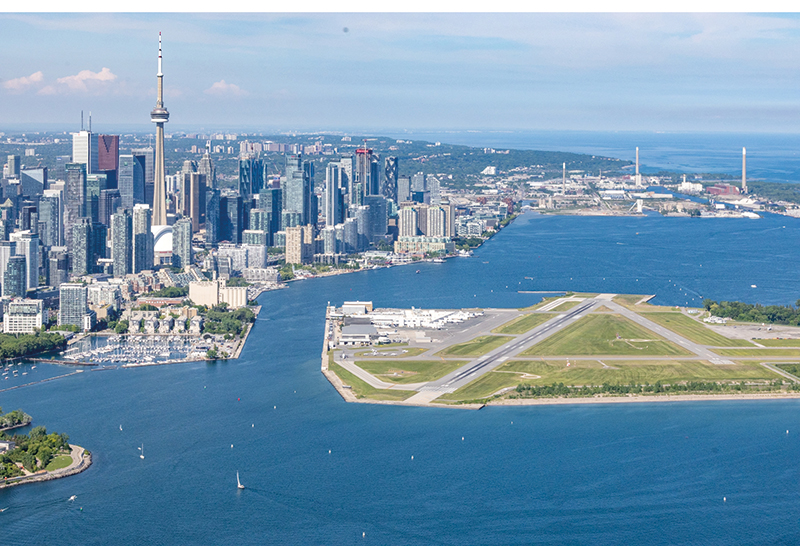
That is why leading the Toronto Port Authority—owner and operator of Billy Bishop Toronto City Airport, the Port of Toronto, and other properties and assets—feels both natural and energizing. Toronto is a global city, but it is also a harbour city, something we sometimes forget. For 115 years, our waterfront drove this region’s growth. It connected us to the world, brought jobs and industry to our shores and helped shape the modern city that rises from the lake’s edge.

Earlier this year we reintroduced the Toronto Port Authority name, replacing PortsToronto, reflecting that history and signalling the future we will help build: a renewed commitment to city-building, investment in infrastructure, economic growth and a harbour ready for the next century.
But this is a change that isn’t about nostalgia. It positions us to respond to the economic pressures and opportunities shaping Toronto and Canada today.
The Toronto region is growing rapidly. Canada is rethinking how we secure supply chains, diversify trade routes and modernize the infrastructure that supports our economic sovereignty. Cities around the world are transforming their waterfronts into places to live, work and innovate. Toronto now has an opportunity to reimagine its harbour not as a collection of assets, but as an integrated transportation ecosystem and economic engine.
That vision begins with recognizing the significant role our assets already play. The Port of Toronto imports the essentials that keep the region running. Steel, cement, aggregate, sugar and road salt arrive through the port and support construction, industry, food production and winter safety. These supply lines stretch across Europe, Asia, Central and South America and the South Pacific, making Toronto one of the few Canadian gateways not reliant on U.S. imports and therefore more resilient to tariff uncertainty. Amid geopolitical volatility, this diversification matters. And as the Great Lakes–St. Lawrence trade corridor modernizes, Toronto can play an even greater role. With targeted investments, the Port has the potential to move significantly more cargo by 2030.
Billy Bishop Toronto City Airport, meanwhile, is one of Canada’s busiest airports and a major economic engine, generating $2 billion in annual output and supporting nearly 4,500 jobs. With U.S. preclearance now open, and as airlines expand service, Billy Bishop Airport is entering a new era that will expand its reach and impact.
Our cruise terminal is another powerful yet quiet contributor. A few years ago, only a handful of ships arrived each season; in 2025, nearly 50 visited, bringing nearly 20,000 passengers and injecting millions into Toronto’s economy.
Together, these assets underline a simple truth: the harbour is not a single-use space. The world’s great waterfront cities embrace mixed-use models where commerce, community life and recreation reinforce one another. Toronto can do the same while reflecting our own identity and priorities.
Looking ahead, the greatest untapped opportunity for Toronto is the water itself. For decades we have focused on roads, subways and rail to address congestion. Yet we have a blue highway running through the heart of the region. Marine mobility can connect communities along the shoreline, ease pressure on roads and transit and link directly to our island airport. It could transform how people move across the city. As partners explore new services, including new projects like Hoverlink, this potential is becoming real.
We also have an opportunity to strengthen the Great Lakes by collaborating with other Canadian inland ports, supporting short-sea shipping and playing a broader role in national trade diversification. With coordinated investment, including through the Trade Diversification Corridors Fund, we can unlock capacity that benefits the region and the country.
Toronto’s future will depend on how well we use the assets that define us. The water is one of them. It always has been. Now it is time to embrace its full potential.
RJ Steenstra is president and CEO of the Toronto Port Authority.
[This article appeared in the March/April 2026 issue of ReNew Canada.]
Featured image: (Toronto Port Authority)