
As global trade fragments into blocs and trusted corridors, Canada has a significant opportunity to diversify exports beyond its historical reliance on the United States, according to a new PwC Canada report, New markets, new routes for Canadian logistics. The report finds that with the right investment in transportation, logistics and processing capacity, key Canadian sectors could generate approximately $146 billion in additional non-U.S. export growth by 2035.
The report identifies where global demand is likely to grow over the next decade, which Canadian sectors are best positioned to benefit, and what Canada needs to build or finance to reach those markets. It points to energy, metals and minerals, and agri-food as the clearest opportunities because they can reach broader global buyer pools and are less dependent on integrated North American production networks than many manufactured goods.
“Canada has the products the world is looking for, but demand alone will not create growth. The next decade will be defined by whether Canada can move quickly enough to build the infrastructure, processing capacity, export corridors and commercial relationships needed to reach new markets.”Michael English, Transportation and Logistics leader, PwC Canada

The report notes that as governments reshape trade flows through industrial policy and companies prioritize resilience over pure efficiency, Canada’s growth opportunity is increasingly tied to east-west trade routes, ports, inland gateways and intermodal connections. It finds that unlocking that growth will require aligning public policy, private capital and global buyers around investable projects that expand transportation, logistics and processing capacity across priority sectors.
Key sector opportunities and constraints
Energy, mining, metals and minerals: This is the largest strategic opportunity, with energy products projected to reach $106.31B by 2035 and minerals-related categories also showing significant upside. Canada is well positioned to meet allied demand for secure LNG, oil, critical minerals and metals, but limited export capacity, processing and port handling could hold growth back. Investment in terminals, processing capacity, specialized port equipment and long-term offtake agreements can help turn Canada’s resource advantage into market share.
Agriculture and food products: Agri-food products are projected to reach $82.65B by 2035, making this one of Canada’s most actionable near-term diversification opportunities. Canada already exports at scale and is trusted for quality, traceability and food safety, but growth will depend on expanding processing capacity, modernizing grain and food handling, strengthening corridor resilience and improving access to Europe and other growth markets.
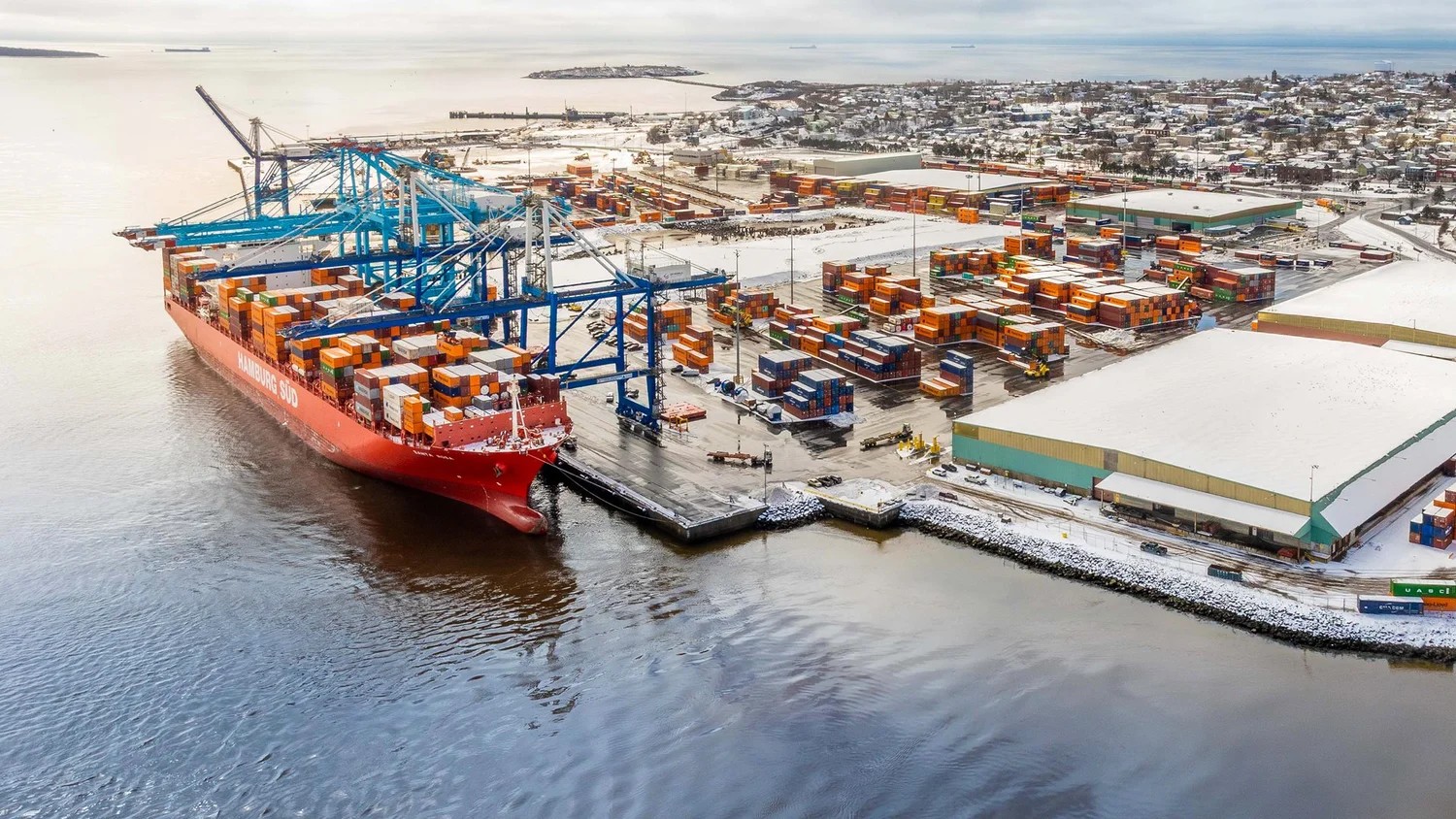
Featured image: (Port of Saint John)