
Four B.C. housing organizations are calling on all parties in the provincial election to lower building costs and restore funding for thousands of affordable homes.
The Urban Development Institute (UDI), BC Non-Profit Housing Association (BCNPHA), Aboriginal Housing Management Association (AHMA), and Co-operative Housing Federation of BC (CHFBC) are calling on every party to commit to bringing down the cost of building homes.
The coaliton says the cost of building and financing a home in B.C. now exceeds what most buyers can afford to pay and what governments are willing to subsidize for low- and moderate-income renters. For market and non-market builders alike, this means projects that don’t pencil and never get off the drawing board.
The impact is already visible. The last provincial budget cut $1.4 billion from planned investments into affordable housing. That cut stranded non-profit projects where land had been identified, and money had already been spent on design and approvals. More than 5,000 affordable rental homes through the Community Housing and Indigenous Housing Fund were deferred with no new timeline for re-investment. As a result, non-profits, co-ops and their private sector development partners lost $45 million in predevelopment costs and future projects were shelved.
“When market developers and non-profit housing providers are asking for the same thing, it should tell every party how serious the cost of delivery crisis is,” said Mike Drummond, CEO of the Urban Development Institute.
For non-market developers, rising costs mean a bigger affordability gap and more people pushed to the margins.
Both sectors face the same cost stack: land, construction, government fees and charges, financing, and time. If government brings those costs down, both sectors build more. Lowering housing delivery costs is an investment in affordability, economic productivity, jobs, and stronger communities.
“The projects are ready, but the land sits empty. The people waiting for affordable housing cannot wait another budget cycle. The next government has an opportunity to restore the investment and get these homes built,” said Jill Atkey, CEO of the BC Non-Profit Housing Association.
“The commitments made in 2024 need to translate into homes on the ground,” added Margaret Pfoh, CEO of the Aboriginal Housing Management Association.
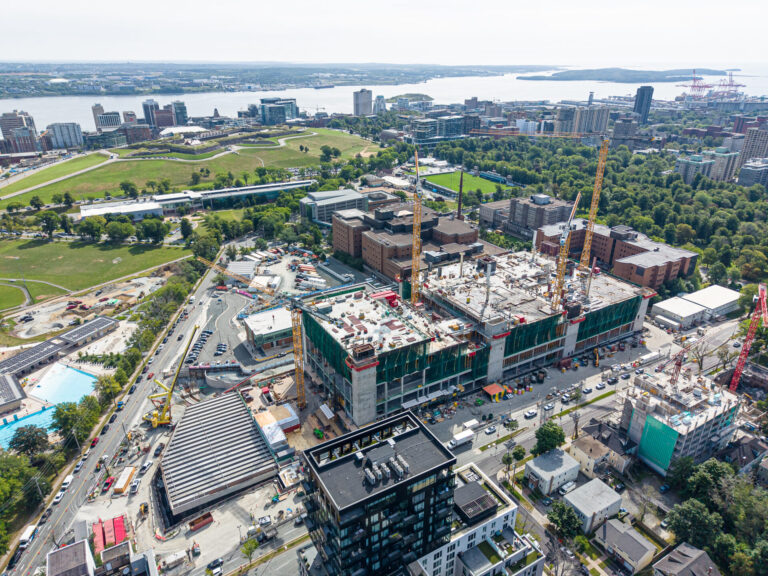
Featured image: (Province of Nova Scotia)