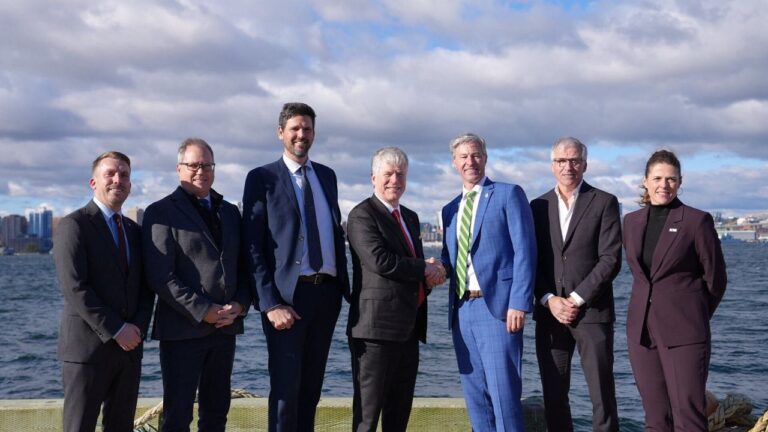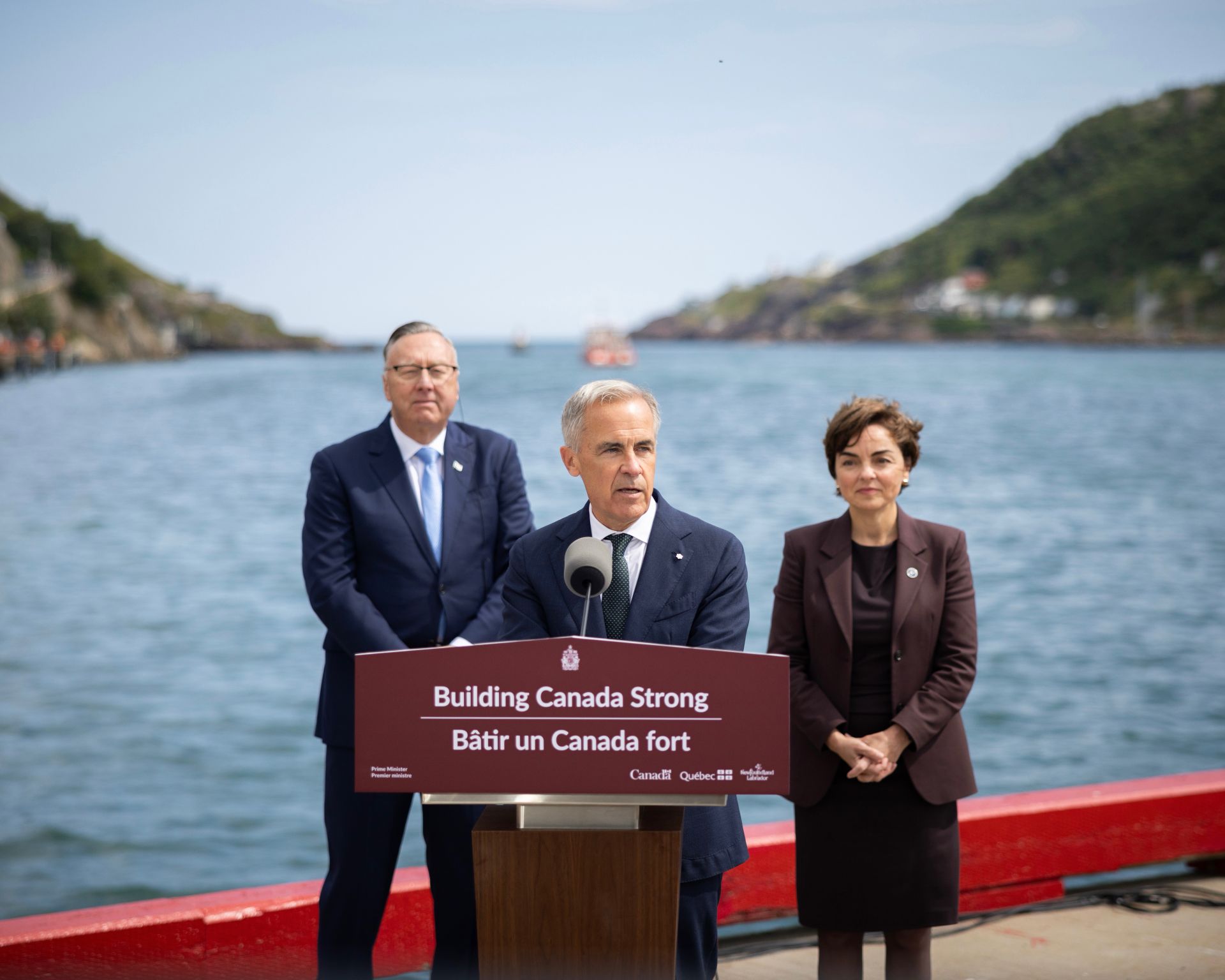

Prime Minister, Mark Carney, alongside the Premier of Québec, Christine Fréchette, the Premier of Newfoundland and Labrador, Tony Wakeham, and the CEOs of Hydro-Québec and Newfoundland and Labrador Hydro, announced a historic agreement to upgrade and expand the Churchill Falls Generating Station and develop the Gull Island project and related transmission, building one of the largest electricity projects in North America.
As part of this agreement, the federal government will provide $10 billion in federal financing to:
- Upgrade and expand the Churchill Falls Generating Station.
- Develop the massive Gull Island hydroelectricity project.
- Unlock co-investment opportunities with the Innu of Labrador in a major new Labrador onshore wind project.
- Build associated transmission lines.
“Canada is extending its unique advantage in clean, reliable, and affordable power. Because when we master energy, we master our destiny. Through cooperative federalism, we are unlocking our immense potential, building big, building sustainably, building in partnership, and building Canada strong for all,” said Carney.

Together, these projects will generate 14,000 megawatts of clean, renewable power – nearly tripling the current generating capacity of Churchill Falls, enough power to light, heat, and cool all the homes in Toronto, Montréal, and Vancouver combined.
“In the current geopolitical context, it is vital for every nation to secure its energy future. I am very proud to announce today the conclusion of this new agreement, which is a priority for Québec, particularly for generations to come. Through this partnership, we are supporting the energy transition and enabling the growth of our economy through renewable energy, while ensuring our energy independence,” said Fréchette.
“This is a win-win-win for Newfoundland and Labrador, the federal government, and Québec. I want to thank Prime Minister Carney and Premier Fréchette for their leadership throughout this process. We are finally replacing the notorious 1969 Churchill Falls deal and the 2024 MOU with a new deal that will guarantee us more power, more value, and more transmission. Newfoundlanders and Labradorians will finally be the primary beneficiary of our own resources, with complete control over whether we use our power to develop our economy or sell to outside markets. Today is not about what we can tear up, it’s about what we can build up. It is now time for us to roll up our sleeves and get to work to build a better and brighter future for all of us,” said Wakeham.
The Labrador Trough is a world-class mining region across Newfoundland and Labrador and Québec, with significant sources of high-purity iron ore. To harness this strategic asset and create high-paying careers for Canadian workers, the government announced the referral of the Labrador Trough Clean Power, Critical Minerals and Infrastructure Corridor to the Major Projects Office (MPO). The MPO will coordinate and structure federal financing, accelerate permitting requirements, and work with Indigenous Peoples to forge meaningful partnerships.
In addition, the federal government will support strategic, pre-development projects in the Labrador region, funded under the First and Last Mile Fund (FLMF) through Natural Resources Canada. This includes the following projects:
- Labrador West Transmission Expansion to assess the transmission infrastructure needed to connect critical minerals mining operations in western Labrador to the electricity grid, supporting regional opportunities and mine electrification.
- Kami Iron Mine Partnership’s project to undertake planning and feasibility work for the transportation and energy infrastructure required for the large-scale Kami iron ore project near Wabush, Newfoundland and Labrador.
- Focus Graphite’s project to undertake pre-construction work for a new transmission line and road connecting the Lac Knife graphite project to Hydro-Québec’s power grid, advancing the development of projects that will support the battery and energy storage technologies this country and our allies need.
- SFP Pointe-Noire’s project to expand critical minerals handling capacity and related rail infrastructure, strengthening a key transportation gateway for mining production in the Labrador Trough.
Featured image: (Government of Canada)