
By Johanne Mullen
Imagine Canada’s infrastructure in 2050—not as a collection of disconnected assets, but as integrated systems. Roads that access mining regions serve remote defence installations and enhance regional mobility. Rail corridors that accommodate transmission lines powering both manufacturing facilities and local communities. Digital systems woven through every layer.
This future is within reach. A new Oxford Economics forecast prepared for PwC projects Canada will need $4.7 trillion in infrastructure investments by 2050. (All report figures are in 2023 USD.) This includes new and renewed roads, bridges, and waterworks alongside hospitals, data centres, and defence facilities, among other structures.

Canada currently ranks fourth globally in annual infrastructure spending at $145 billion. By 2050, that’s projected to grow to $210 billion annually, a 45 per cent increase that preserves our position within the top five spending nations.
Building Canada’s infrastructure demands coordination. Governments are investing simultaneously in transit, housing infrastructure, energy, utilities, trade corridors, and digital infrastructure. Workforce constraints pose one of the biggest risks to delivering Canada’s infrastructure agenda. But solutions exist—targeted training and certification programs, strategic immigration, and more.
Equally critical: reimagining how we build infrastructure. Engaging Indigenous communities as full economic partners will underpin Canada’s infrastructure buildout and help our investments deliver broader public benefits beyond private returns alone. At the same time, infrastructure developers and operators have an opportunity to reinvent how they create, deliver, and capture value. Advanced technology, including AI, will reshape project delivery, productivity, and cost competitiveness.
Canada can exceed this forecast. It can also fall short of it. The difference comes down to the moves we make next.
The size and makeup of Canada’s infrastructure opportunity
The largest share of Canada’s infrastructure investments will flow to the resources sector, reaching $63 billion annually by 2050. Transportation is the second largest at $42 billion annually. Social infrastructure (health, aged care, and education) will reach $33 billion annually. These three sectors will account for roughly two-thirds of all Canadian infrastructure spending in 2050.
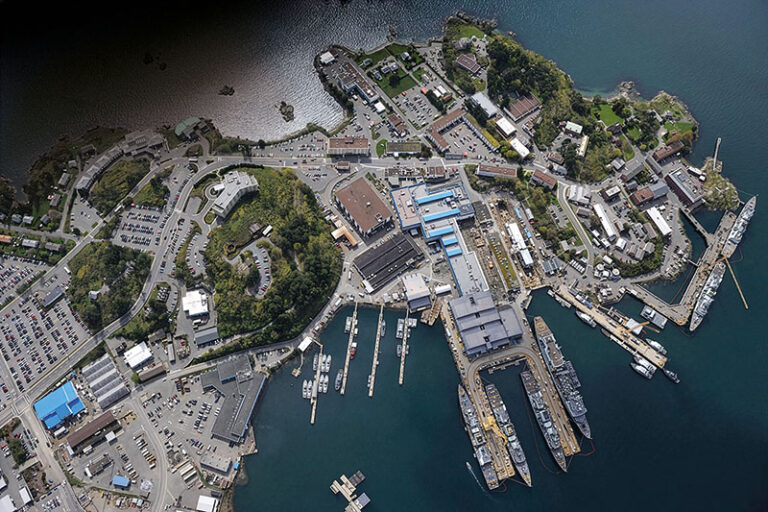
Defence infrastructure is Canada’s fastest-growing sector and is projected to grow 389 per cent between 2024 and 2050—a pace that requires modernized defence procurement approaches. This aligns with Canada’s commitment to dedicate an additional 1.5 per cent of GDP to critical defence and security investments. Many of these investments—airports, ports, communications systems—can serve dual applications, strengthening both defence capabilities and civilian infrastructure needs.
Yet Canada’s infrastructure spending remains highly concentrated. Resource investments alone will represent roughly 30 per cent of Canada’s infrastructure mix in 2050. This isn’t a weakness. Resources are a Canadian strength. This concentration should be read as a prioritization signal and prompt infrastructure developers to consider several questions, including:
• Where does Canada already have a significant advantage?
• Where can infrastructure unlock multiple objectives simultaneously?
At the same time, other countries are diversifying faster into sectors that are reshaping energy systems, trade networks, and digital infrastructure. For example, nuclear power is expected to grow 45 per cent globally between 2024 and 2050, compared to 11 per cent in Canada, despite several high-profile projects in this country. Elsewhere, ports and airports—the connectors enabling global trade—will increase 73 and 93 per cent globally, compared to 64 and 78 per cent in Canada.
While fast-growing emerging economies buoy these global averages, Canada also risks falling behind other advanced economies—including the U.S. Looking at the same investment categories, the U.S. is expected to outpace Canada in nuclear power (17 versus 11 per cent) airports (99 versus 78 per cent and several other categories. We see the same pattern elsewhere. For example, Canada is projected to trail peer countries such as the U.K. and Australia in attracting data centre investments.
Canada ranks high in absolute infrastructure spending. But when measured as a percentage of GDP, we’re falling behind. Canada currently invests 6.6 per cent of GDP on infrastructure. Our high-performing peers invest 7.4 per cent That gap constrains Canada’s economic growth and competitiveness. Closing it requires an additional $34 billion annually by 2050. Governments and businesses must act now—investing in common priorities and working together in new ways.
From silos to systems
Consider what it will take to develop the Ring of Fire, Ontario’s mineral-rich region located more than 500 kilometres northeast of Thunder Bay. It needs roads. It needs power generation and transmission lines. It needs fibre connectivity. It needs housing and critical social infrastructure such as health care for workers and communities. Without this supporting infrastructure—and without meaningful Indigenous partnerships—development cannot proceed.
This is Canada’s infrastructure opportunity: multi-use, integrated systems built together rather than discrete assets constructed in sequence. Boundaries are fading, putting an enormous amount of value in motion across the economy.
For investors, this reconfiguration is equally significant. Infrastructure, real estate, and private equity are converging at the portfolio level. Capital pools that once specialized in one category are now investing across all three, with risk and return profiles blurring.
Delivering converged infrastructure requires coordination across staggered project phases. Each infrastructure layer must enable the next, serving multiple purposes, users, and communities. But converged projects require more than converged delivery. They require capital structures that can fund infrastructure serving multiple purposes and multiple users.
How we fund: Capital structures for a converged era
Convergence creates a distinct financing reality: when a road serves both a mine site and surrounding communities, when a transmission line powers both industry and households, no single user should bear the full financing burden. Community priorities may independently support or constrain these projects, sometimes overriding pure financial considerations.
The structures that follow can work together to facilitate financing from multiple partners. They also illustrate why government’s role is critical in this moment: Canada’s fiscal capacity is constrained, making private capital essential to renewing and building infrastructure. Government must design mechanisms that attract private investment, manage risk, align incentives, and protect taxpayer interests—creating the investable projects private capital requires.
Blended public-private structures: Government catalytic capital absorbs early-stage risk and signals confidence, attracting follow-on private investment.
Asset recycling: Some of Canada’s mature public infrastructure generates predictable revenues and can attract private capital, freeing public capital for higher-risk projects, social assets, and renewal. This creates a self-reinforcing cycle where public capital flows back into infrastructure priorities as new assets mature and can be recycled in turn.
User-pay and rate-based models: Infrastructure like roads and utility systems can be self-financed through user fees and tolls that are common in other countries. Moving to rate-based models is a politically fraught proposition. But user-pay systems don’t have to mean direct consumer charges. Shadow tolls publicly owned corporatized assets, and regulated pricing can separate the financing mechanism from direct consumer charges.
Beyond capital structures, successful infrastructure financing also depends on the partnerships that enable it. Indigenous participation is a powerful foundation for major infrastructure projects in Canada. Aligning economic opportunity with Indigenous priorities is critical to advancing many projects.
Earlier arrangements often focused on consultation, mitigation, and providing benefits such as jobs and limited procurement opportunities. Achieving our full infrastructure ambitions hinges on going beyond transactional approaches and creating long-term economic partnerships grounded in shared value and mutual interest. These models exist. They include significant revenue sharing, expanded procurement participation, and equity ownership. Indigenous communities can lead infrastructure development on their own terms, participate in construction, and hold operations and maintenance contracts that generate revenue for decades. But these approaches are not yet the norm.
Taken together, these structures give Canada a path to build more infrastructure than current forecasts project. The next question is how Canada builds what that capital enables.
How we build: The reinvention imperative
Engineering and construction firms, operators, and the governments that contract them are rethinking how they do business with each other. Canada has a long and successful track record with outcome-based contracts that tie payment to performance as well as infrastructure-as-a-service arrangements that bundle design, construction, operations, and financing into a single commercial relationship.
These models reflect a broader shift toward ecosystem-based value creation. They demand a workforce that can operate across asset classes. This reflects a skills-based view of talent that leading organizations in other sectors are already adopting. But this skills-based shift highlights a long-standing challenge: Canada doesn’t produce enough tradespeople to meet today’s infrastructure demand, let alone tomorrow’s. Closing that gap requires building domestic training pipelines. It will also take targeted immigration to bring in the skills Canada can’t develop fast enough on its own.
Workforce is one dimension of reinvention. Technology is another. AI has the potential to be an internal productivity tool across the project lifecycle: predictive risk analysis and digital twins in design, AI-enabled approvals and sequencing in planning, automated project controls and integrated data environments in delivery.
But reinvention often demands more than internal change. Acquisitions bring in capabilities faster than companies can build them. And divestitures can free up capital and focus by shedding parts of the business that don’t fit the new model.
Tax can influence the economics of these decisions. Companies that factor tax in early are better positioned to manage risk, align strategy with tax policy, and achieve appropriate returns on reinvention investments.
Canada’s choice: Accelerating our competitive edge
The scale of Canada’s infrastructure opportunity is clear. So are the choices ahead—how we integrate infrastructure, fund it, and deliver it differently. Canadian governments, investors, developers, engineers, and operators can shape what comes next. Get it right, and trillions of dollars of investment will deliver more than steel, concrete, and cable. It will build a more productive, resilient, and sovereign Canada.
Johanne Mullen is a PwC Canada Deals Partner and National Leader of the Real Assets practice.
[This article appeared in the September/October 2026 issue of ReNew Canada.]
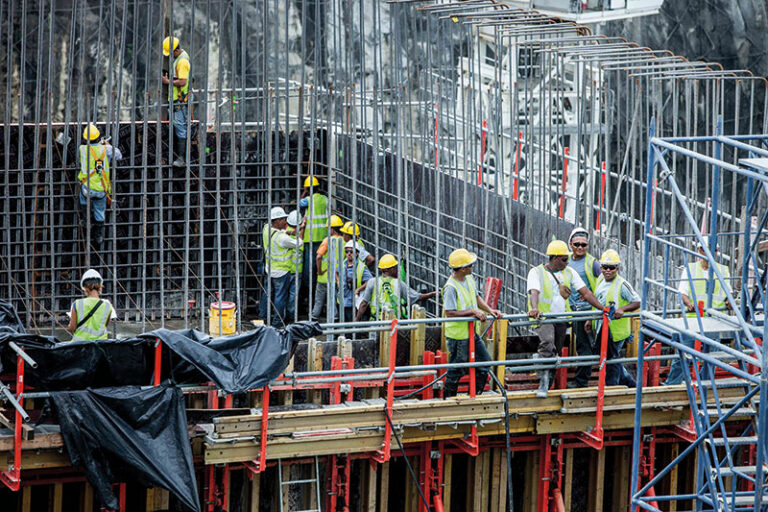
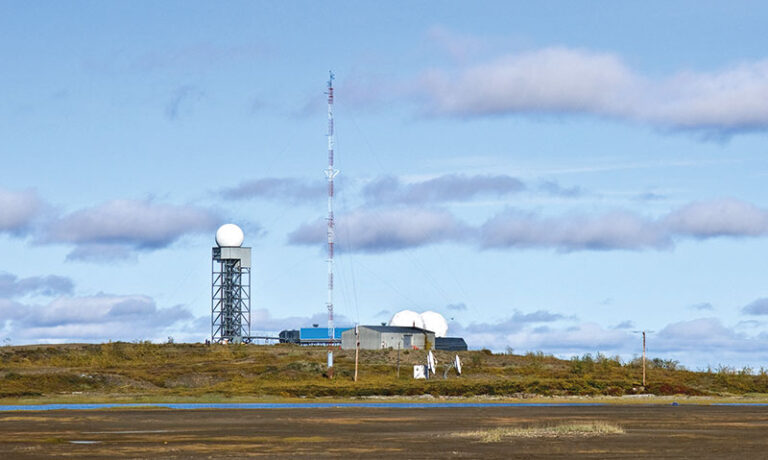
Featured image: The largest share of Canada’s infrastructure investments will flow to the resources sector, reaching $63 billion annually by 2050. (Government of Ontario)