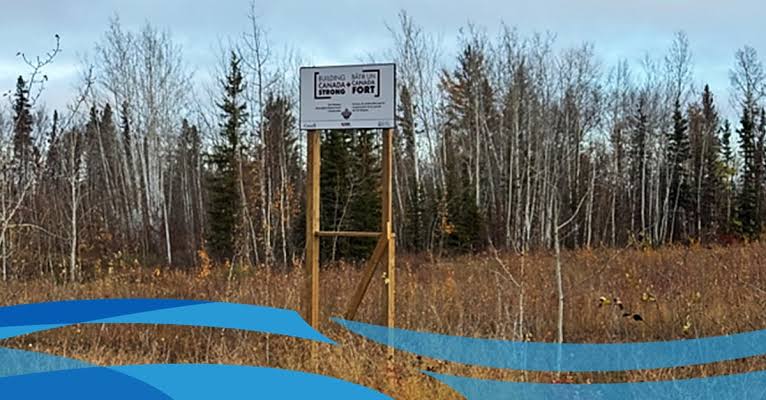

The Government of Canada is contributing more than $31.3 million through the Investing in Canada Infrastructure Program’s (ICIP) Arctic Energy Fund, while the NTPC is contributing more than $10.4 million toward a new liquefied natural gas power plant.
The existing diesel plant in Fort Simpson has become vulnerable to erosion along the Mackenzie River and is nearing the end of its operational life. To address these challenges, the project will support the construction of a combined generation facility that will primarily generate power using liquefied natural gas (LNG). The new power plant will include two 1.6 MW liquefied natural gas (LNG) generation units and two backup diesel generation units. The plant is forecast to run on 90 per cent LNG. The new facility will also include an LNG storage and vaporization facility, a bi-fuel boiler for heating purposes, bulk diesel fuel storage, a substation, and associated auxiliary equipment. The backup diesel generators from the existing plant will be relocated to the new facility.
“This project represents progress and an opportunity to build on Fort Simpson’s resilience and economic potential. Investments in reliable infrastructure create a stronger foundation for local opportunities and help position communities for long-term growth and prosperity,” said Caroline Wawzonek, Minister Responsible for Strategic Infrastructure, Energy and Supply Chains.

The new plant will help reduce reliance on diesel generation, improve energy reliability and energy security, and support a cleaner energy future, with an expected reduction in greenhouse gas (GHG) emissions, a part of the GNWT’s priorities under its 2030 Energy Strategy.
“This investment is an important step toward a more reliable and sustainable energy future for Fort Simpson,” said Shane Thompson, MLA for Nahendeh. “Relocating the power plant away from the eroding riverbank will help protect critical infrastructure, while reducing reliance on diesel will lower emissions and support a more efficient energy system.”
Featured image: (GNWT)